
April 22, 2026
From the sandy reaches of St. Mary’s to the hills of Prince George’s, Southern Maryland’s trees are as diverse as the people who live here. But a beautiful backyard requires more than just luck. Identifying your native canopy is your first line of defense against local pests and storm damage. We’re here to help you understand exactly what’s growing in your yard so you can keep your property safe, healthy, and resilient for years to come.
Key Takeaways
- Dominant Species: Oaks and Pines make up the majority of the Southern Maryland canopy.
- Environmental Fit: Native species like the Loblolly Pine are perfectly adapted to our acidic, sandy coastal soils.
- Common Risks: Many of our most common trees are currently facing specific threats like Bacterial Leaf Scorch and the Emerald Ash Borer.
- Property Value: Mature native trees can increase Southern Maryland property values by up to 15%, provided they are professionally maintained.
What are the most common trees in Southern Maryland?
The most common trees in Southern Maryland are a mix of “Hardwoods” (Deciduous) and “Softwoods” (Coniferous), primarily dominated by the White Oak, Loblolly Pine, Tulip Poplar, and Sweetgum. These species thrive in the region’s humid subtropical climate and varied soil types, ranging from well-drained upland sands to silty lowland basins. Understanding these species is essential for local land management and residential tree service company operations.
1. The Mighty Oaks (Maryland’s State Symbol)
The Oak genus is the backbone of the Southern Maryland forest. Specifically, the White Oak (Quercus alba), Maryland’s official state tree, is ubiquitous. It is easily identified by its light gray, flaky bark and rounded leaf lobes.
White Oak vs. Red Oak
While both are common, the White Oak is more drought-resistant and can live for centuries. The Northern Red Oak, conversely, grows faster but is more susceptible to “Oak Wilt.” In residential areas, we often see these trees reaching heights of 80–100 feet, providing massive shade canopies that significantly lower summer cooling costs.
Field Insight: I recently evaluated a 200-year-old White Oak in La Plata. The homeowner was worried about the “flaky” bark. I was happy to tell them that for a White Oak, that’s a sign of health! It’s the “tight” bark on an old oak that usually signals a growth problem.
2. Loblolly Pine: The Coastal Workhorse
If you live near the Patuxent or Potomac rivers, you are likely surrounded by Loblolly Pines (Pinus taeda). These are the fast-growing, straight-trunked giants often used in the timber industry. According to Wikipedia’s entry on the Loblolly Pine, it is the second most common species of tree in the United States, and it thrives in the wet, acidic soils of the Maryland coastal plain.
Managing Pine Risks
Loblollys have a shallow root system. During Southern Maryland’s notorious summer thunderstorms and “Nor’easters,” these trees are often the first to fail if the soil becomes saturated. If you have a tall Loblolly leaning toward your home, professional tree removal is often a necessary safety measure before the hurricane season peaks.
- The Tulip Poplar: The Skyscraper of the Forest
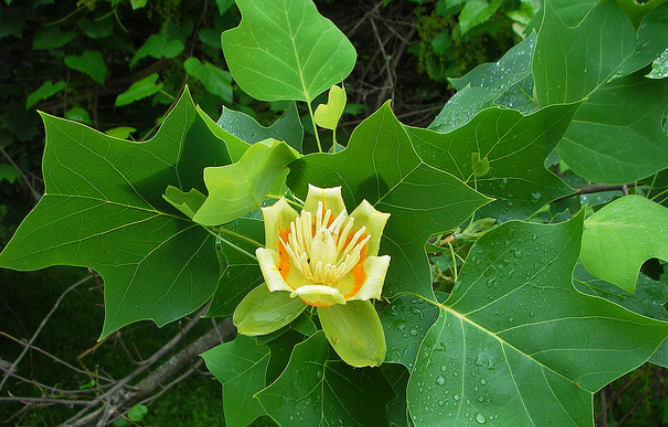
The Tulip Poplar (Liriodendron tulipifera) is not actually a poplar as it’s a member of the magnolia family. It is arguably the tallest hardwood in Southern Maryland. You’ll recognize them by their distinct “cat-face” shaped leaves and beautiful yellow-green flowers that bloom in late spring.
Why They Matter for Homeowners
Tulip Poplars grow incredibly fast. While this is great for quick shade, it means the wood is relatively soft. During ice storms, these trees are prone to “limb drop.” We frequently see Tulip Poplars in Calvert County that have grown too tall for their residential lots, requiring regular “deadwooding” to keep the area underneath safe for families.
- Understory Favorites: Dogwoods and Hollies
Not every common tree is a giant. The Flowering Dogwood and the American Holly are the two most common understory trees in our region.
- American Holly: As an evergreen, it provides essential winter color and privacy screening for Maryland suburbs.
- Dogwood: While beautiful, many local Dogwoods are struggling with Anthracnose, a fungal disease. If you see spotting on the leaves or dieback in the lower branches, it’s time for an arborist review.
- The “Problem” Trees: Sweetgum and Bradford Pear
No list of Southern Maryland trees is complete without the Sweetgum. While native and beautiful in the fall, homeowners know them best for their “gumball” seed pods that clutter lawns.
Additionally, we still see many Bradford Pears. Though once popular in Annapolis and Waldorf developments, they are now considered invasive and structurally poor. They often split in half during even minor wind events. Many local municipalities now offer “bounty” programs to encourage homeowners to replace these with native species like the Serviceberry.
Frequently Asked Questions
What is the best tree to plant in Southern Maryland for shade?
The Willow Oak is a local favorite. It grows relatively quickly for an oak, has small leaves that are easy to rake, and is very tolerant of the heat and poor drainage found in parts of Charles County.
Why are so many Ash trees dying in Southern Maryland?
The Emerald Ash Borer (EAB) has unfortunately decimated the local Ash population. If you have an Ash tree that hasn’t been treated, it is likely already infested. Dead Ash trees become brittle very quickly and should be removed promptly.
How can I tell if my Pine tree is healthy?
Look at the “candles” (the new growth at the tips of the branches). If the candles are long and green, the tree is thriving. If you see “bleeding” sap on the trunk or holes the size of a buckshot, you may have bark beetles.
Which trees are most likely to fall during a storm?
Tulip Poplars, Loblolly Pines, and Silver Maples are the most common “storm victims” in our area due to their wood density and root structures.
When is the best time to prune these native trees?
For most Southern Maryland hardwoods, late winter (January–February) is ideal. This is when the tree is dormant, and the lack of foliage allows arborists to see the structural “skeleton” of the tree clearly.
Is the “Gumball” tree (Sweetgum) native to Maryland?
Yes, it is a native species. While the seed pods are a nuisance, the tree provides excellent carbon sequestration and beautiful purple-red fall foliage.
What is the “Maryland State Tree”?
The White Oak. The most famous example was the Wye Oak, which stood for over 450 years before falling in a storm in 2002.
Do I need a permit to remove a tree in Southern Maryland?
It depends on your county and whether you are in a “Critical Area” (near the shoreline). Always check with your local planning office in Leonardtown, Prince Frederick, or La Plata before removing large canopy trees.
Conclusion
Whether you are walking through the woods in Calvert Cliffs or sitting in your backyard in Waldorf, the trees of Southern Maryland are a vital part of our ecosystem. By identifying these common species and understanding their specific needs and risks, you can ensure your landscape remains a safe, beautiful, and valuable asset.
Reviewed by Empire Tree Services
This safety analysis has been reviewed by the team at Empire Tree Services to ensure accuracy based on hands-on tree care experience, soil behavior, and real-world tree risk scenarios.