
May 12, 2026
Key Takeaways
- Deadwood Hazards: Brittle, leafless branches are “widowmakers” that fail first in high winds.
- Root Stability: Heaving soil or mushrooms at the base indicate root rot and imminent instability.
- Trunk Integrity: Deep vertical cracks and hollow cavities suggest the tree can no longer support its own weight.
- Sudden Leaning: A tree that shifts its angle quickly is a high-priority emergency.
- Proactive Inspection: Catching these signs early prevents catastrophic property damage and costly emergency removals.
Residents of Southern Maryland are no strangers to the volatile nature of the Atlantic storm season. From the heavy wet snows of late winter to the high velocity winds of summer thunderstorms and the lingering threat of tropical depressions, the local canopy is constantly under pressure. In St Mary’s, Charles, and Calvert Counties, the landscape is defined by majestic Oaks, Maples, and Loblolly Pines. While these trees provide shade and property value, they also represent a significant structural risk when their health declines.
A mature tree can weigh several tons. When gravity and high winds combine, the kinetic energy released during a fall can easily crush roofing systems, power lines, and vehicles. Waiting for the storm to arrive before assessing your trees is a gamble with high stakes. Recognizing the subtle red flags of a failing tree can be the difference between a routine pruning and a catastrophic emergency.
Here are the five critical signs that your tree is structurally compromised and likely to fall in the next storm.
1. Deep Trunk Cracks and Vertical Seams
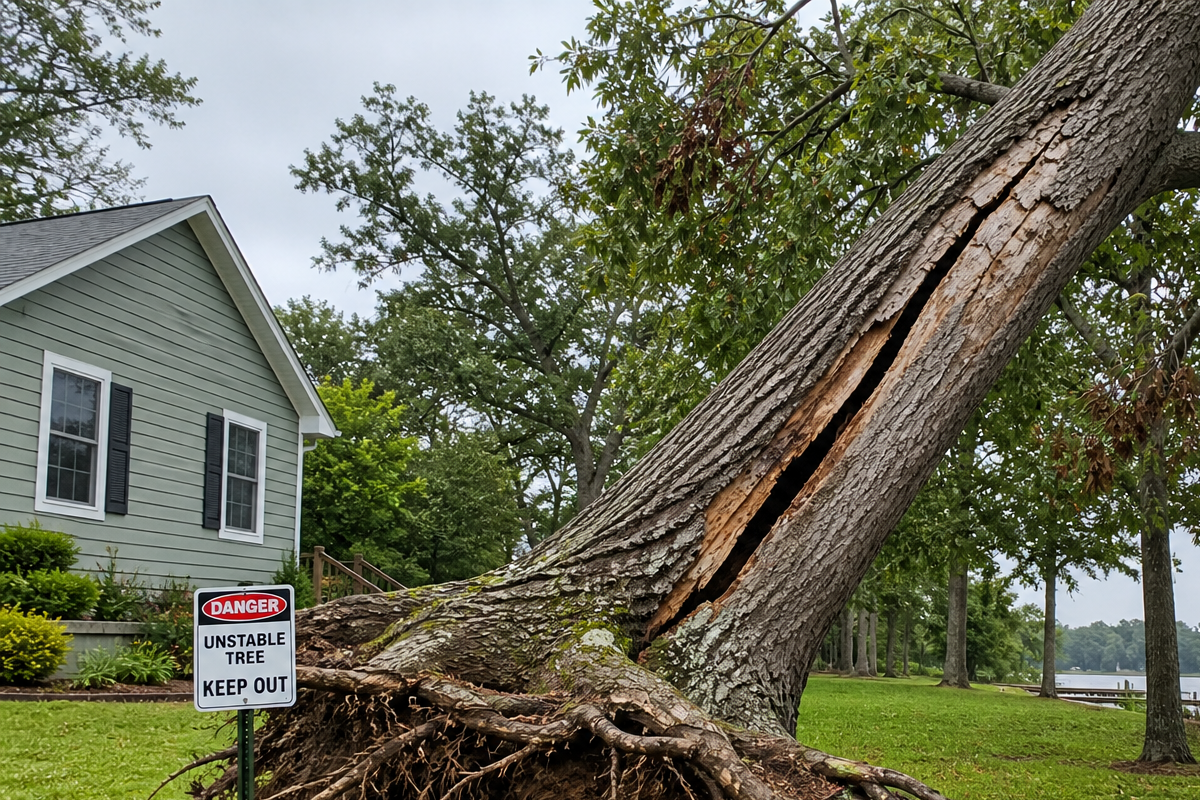
While bark naturally furrows and cracks as a tree grows, deep vertical splits that penetrate the inner wood are a major warning sign. These cracks often indicate that the tree is literally pulling itself apart under its own weight. In Southern Maryland, we often see frost cracks or sunscald, but the most dangerous are the vertical seams where two trunks meet.
If you see a crack extending deep into the trunk or daylight visible through a split, the internal structural integrity is gone. During a storm, wind creates torque on the trunk. A solid trunk can bend and sway, but a cracked trunk acts like a perforated piece of paper. It will snap at the point of the crack as soon as the pressure exceeds the wood’s remaining strength. These cracks are often the first visible signs of stress fractures from previous wind events that haven’t quite reached the point of total failure yet.
2. The Sudden Lean and Root Plate Heaving
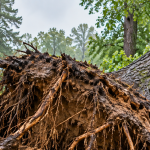
Trees rarely grow perfectly straight, and a self-correcting lean where the tree has curved back toward the sky over the years is usually not an immediate threat. However, a sudden lean is a dire emergency. If you notice that a tree is tilting more than it was a month ago or if the soil on the side opposite the lean is bulging or heaving, the root system has failed.
This is often called windthrow preparation. In places like Mechanicsville or Dunkirk, our heavy clay soils can become saturated during storms. Saturated clay loses its grip on the root ball. If you see cracked soil or exposed roots popping up out of the ground, the tree is no longer anchored. It is effectively a dead man leaning waiting for one strong gust to finish the job. This root plate failure means the anchor system has loosened, and it may only take one strong gust of wind to send it toppling over.
3. Hollow Cavities and Fungal Growth
A hollow tree isn’t always a dead tree, but it is a structurally weakened one. If a large cavity exists in the main trunk, especially near the base, the wall thickness of the wood may be insufficient to support the canopy. Look for signs of internal decay, such as mushrooms or conks growing on the bark.
These fungi are the fruiting bodies of internal rot. If you see mushrooms growing from the trunk or the root flares, it means the fungi are actively digesting the cellulose and lignin that give the tree its strength. Statistically, if more than 30% of a tree’s interior is decayed or hollow, it is considered high risk for failure. In Southern Maryland, oak trees are particularly susceptible to heart rot, which can hide inside a seemingly healthy-looking tree until a storm hits.
4. The Deadwood Hazard and Hanging Limbs
Dead branches are the first things to fly during a storm. Forestry experts often refer to these as widow makers. A dead branch lacks the flexibility of living wood; it is brittle and prone to snapping clean off when hit by a gust of wind. If your tree has large sections where no leaves grow, or if the bark is falling off in large sheets to reveal smooth wood underneath, that section is dead.
During a Maryland thunderstorm, these limbs become unguided missiles. Even if the main trunk stands, a falling 500-pound limb from a height of 40 feet can cause fatal injuries or pierce through a home’s attic. If you see V-shaped unions where two branches grow tightly together, these are also weak points known as included bark that are prone to splitting away from the main tree during heavy ice or wind loads.
5. Soil Saturation and Poor Drainage Issues
The environment around the tree is just as important as the tree itself. Southern Maryland’s geography includes many Critical Areas near the Chesapeake Bay and its tributaries, where the water table is high. Trees in areas with poor drainage are at a much higher risk of falling.
Constant saturation leads to root rot, which turns healthy anchoring roots into mush. Furthermore, if there has been recent construction, trenching, or landscaping near the tree, the feeder roots may have been severed. A tree with a compromised root zone lacks the guy wire support needed to stay upright when the wind hits the sail of the upper canopy. Compacted clay soil, common in our region, further inhibits root depth, making trees more susceptible to uprooting when the ground turns to mud.
Empire Tree Services is Southern Maryland’s premier choice for safe tree removal and 24/7 storm damage cleanup. We are a 5-star rated team that brings over 60 years of combined experience to every job. We are fully licensed, bonded, and insured, specializing in tree removals, tree trimming and pruning, stump grinding & stump removal, emergency tree removal, 24/7 storm cleanup services, land clearing services, forestry mulching, and commercial tree services with same-day appointments available to protect your property’s integrity. For a free consultation, call us today at (240) 249 7773.
Frequently Asked Questions
1. Is it cheaper to remove a tree before or after it falls?
It is almost always cheaper to remove a tree before it falls. Controlled removals allow for easier equipment access and zero collateral damage. Once a tree is on your roof, the cost of cranes and emergency labor increases significantly.
2. Does insurance cover a tree that falls but hits nothing?
Generally no. Most homeowners’ insurance policies only cover tree removal if the tree damages a covered structure like your house, garage, or fence. Removing a yard tree that falls in the grass is usually an out-of-pocket expense.
3. How quickly can a crew respond after a storm?
Emergency teams often offer 24/7 response and prioritize cases where trees have hit homes or blocked driveways. It is common to provide same-day service for critical emergencies in the Southern Maryland area.
4. Can a tree be saved if it has a hollow cavity?
Sometimes. Depending on the location of the cavity and the overall health of the tree, cabling and bracing or weight reduction pruning can extend its life. However, a professional assessment is required to determine the safety risk.
5. Do I need a permit to remove a hazardous tree in the Critical Area?
Yes, in many parts of Southern Maryland, a Critical Area Permit is required. Professional services help homeowners navigate this paperwork to ensure the project is fully compliant with county regulations.
Summary Checklist: Emergency Warning Signs
| Sign of Danger | Risk Level | Recommended Action |
| Heaving soil around the base | Critical | Evacuate the surrounding area immediately and request emergency tree removal |
| Sudden vertical cracks in the trunk | High | Schedule an arborist inspection to evaluate internal decay and structural instability |
| Large dead limbs or widow-makers | Moderate | Perform structural pruning to reduce canopy weight and storm-related breakage risk |
| Sudden increase in tree lean | High | Secure the area and request a same-day emergency tree risk assessment |
| Mushrooms growing near the root flare | High | Inspect for root rot because the tree may no longer have stable root anchoring |
Final Advice
Trees are a vital part of the Southern Maryland ecosystem, but they are living organisms that eventually age, sicken, and fail. The high humidity and varied soil conditions of the region can accelerate decay in species like Silver Maples and Oak trees. By being proactive and recognizing the signs of structural instability, you protect your biggest investment, your home, and the safety of your family. The best time to deal with a hazardous tree is on a clear sunny day. Taking ten minutes to walk your property and look for these five signs is the most cost-effective way to protect your home from sudden impact.
If a tree looks off to you, trust your gut because early intervention prevents the need for 24/7 storm damage cleanup later. Professional stabilization or removal is a small price to pay for the peace of mind that comes with knowing your roof is clear when the wind starts to howl. Identifying these warning signs is the first step in preventing a tree from toppling and ensures that your landscape remains a healthy asset rather than a dangerous liability. Maintaining your property through routine pruning and professional assessments before the storm season hits will save you from the stress of emergency repairs.