
July 20, 2026
Key Takeaways:
- Never approach a storm-damaged tree near power lines and treat every downed line as live and lethal.
- Limbs and trunks under tension can snap back violently when cut, making DIY chainsaw work extremely dangerous.
- Not every storm-damaged tree needs to be removed; a professional assessment can determine whether it can be saved.
- Document all storm damage thoroughly with photos before any cleanup begins, as this protects your insurance claim.
- Empire Tree Services offers 24/7 emergency tree response across St. Mary’s, Charles, and Calvert Counties with same-day appointments available.
How to Handle Storm-Damaged Trees in Southern Maryland Without Making It Worse
Southern Maryland’s storm season is no joke. Between the nor’easters that barrel up the Chesapeake in late winter, the fast-moving thunderstorms that tear through St. Mary’s, Charles, and Calvert Counties every summer, and the occasional tropical system that stalls over the region for days at a time, trees here take a serious beating year after year. And when a storm drops a 70-foot oak across your driveway in the middle of the night, the instinct is to grab a chainsaw and start cutting. That instinct, more often than not, makes things significantly worse.
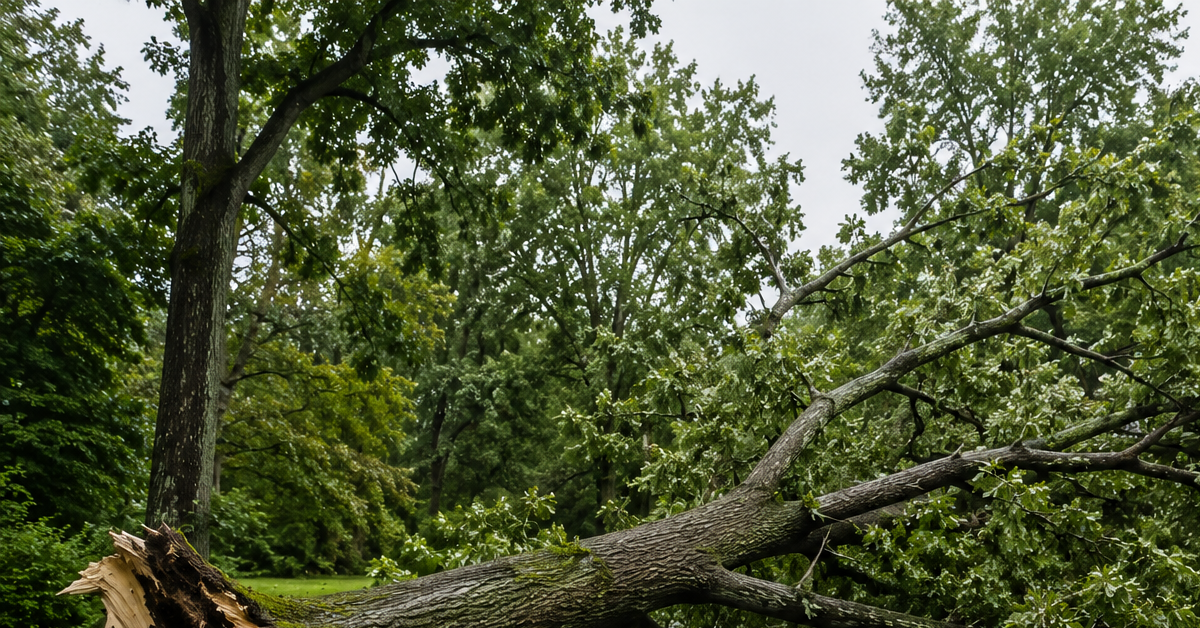
Storm-damaged trees present a unique set of dangers that go far beyond what they look like from your back porch. What appears to be a manageable fallen branch may be a 400-pound limb loaded under tension, ready to snap back violently the moment a cut releases the pressure. A tree that looks perfectly upright and stable may have lost more than half of its root plate underground, making it a collapse risk for days or weeks after the storm passes. Acting too quickly or without the right knowledge and equipment turns a property problem into a medical emergency.
Here is what Southern Maryland homeowners actually need to know when the storm clears and the damage assessment begins.
Step One: Stay Inside Until It Is Actually Safe
This sounds obvious, but post-storm adrenaline is real, and it causes people to make dangerous decisions. Before you step outside to walk your property, confirm the storm has fully passed. Watch for lightning, listen for wind gusts, and check local weather before going out. A second squall line moving through while you are standing next to a compromised tree is a scenario you never want to be in.
Once it is clear, do a visual scan from inside first. Look through windows and from your doorway before committing to walking the yard. If a tree has fallen on or near your home, do not assume the structure is stable. Falling trees can compromise roof joists, wall framing, and foundation elements in ways that are not immediately visible from outside.
Step Two: Treat Every Downed Line as Live and Lethal
This is the rule that saves lives, and it cannot be stated firmly enough. If a tree has come down on or near a power line anywhere in Southern Maryland whether in Mechanicsville, La Plata, Leonardtown, or Prince Frederick you treat that line as energized until a utility company tells you otherwise. You do not touch it. You do not touch the tree that is touching it. You do not touch the fence, vehicle, or any other object that is in contact with either.
Downed lines can energize the soil around them in a phenomenon called step potential, where the ground itself carries enough current to be fatal even if you never touch the wire directly. Keep children, pets, and neighbors well away from the area. Call 911 and your utility provider immediately. Do not attempt any tree work near downed lines under any circumstances not even with rubber gloves or rubber-soled boots. No consumer-grade protective equipment is rated for that level of risk.
Step Three: Assess the Damage Without Touching Anything
Once you have confirmed there are no live line hazards, you can walk the property carefully to assess what you are dealing with. As you do, photograph everything: every fallen limb, every split trunk, every area of soil heave where a root ball has lifted. This documentation is critical for your homeowner’s insurance claim and should be completed before any cleanup begins.
As you look at the damage, you are trying to answer a few key questions.
- Has any tree or large limb landed on a structure in your home, garage, fence, or outbuilding?
- Is any tree leaning significantly that was not leaning before the storm?
- Are there large limbs that are broken but still hanging in the canopy, sometimes called widow makers?
- Are there visible cracks or splits in trunks or major scaffold branches?
- Any yes answer in that list means professional help is needed before you attempt any hands-on work.
Step Four: Understand Why DIY Chainsaw Work Goes Wrong
Most storm-related tree injuries and fatalities involve homeowners who felt confident handling cleanup themselves. The problem is not skill, it is physics. Storm-damaged wood is almost always under tension or compression in ways that are invisible to the untrained eye.
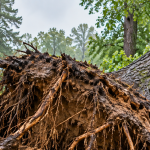
A branch pinned under a fallen trunk may be storing enormous kinetic energy. Cut the wrong section of it and it can launch upward or sideways with enough force to cause serious injury. A leaning tree that looks like it just needs to be dropped straight may have root damage that makes its fall path completely unpredictable. A trunk that appears solid may be hollow or rotted internally, causing the cut to bind and kick the chainsaw bar back toward the operator.
Tree service crews in Southern Maryland use rigging systems, cranes, and advanced cutting methods to safely control heavy and stressed trees. It’s not just about equipment, but knowing how wood under pressure can shift and react. That understanding comes from years of hands-on experience and training.
Step Five: Know Which Trees Can Be Saved
Not every storm-damaged tree is a lost cause, and removing a tree that could have recovered is both expensive and unnecessary. Several factors determine whether a damaged tree is worth saving. Young, healthy trees with good root systems can often recover from broken limbs and even significant crown loss if properly pruned and given time. Trees that have lost less than a third of their canopy in a storm frequently survive with proper care. Species native to Southern Maryland, including white oak, tulip poplar, and loblolly pine, tend to be resilient when the root system and trunk remain structurally intact.
On the other hand, trees that have suffered major trunk splits, extensive bark loss, severe root disturbance, or significant internal decay are generally not candidates for preservation. A professional assessment is the only reliable way to make that determination, and making it correctly saves you money either way by avoiding unnecessary removal or by catching a genuinely hazardous tree before it comes down on your home in the next storm.
Step Six: Document Everything for Your Insurance Claim
Before any debris is moved or cleanup begins, photograph and video the full extent of the damage from multiple angles. Capture the tree, the point of impact, the damage to structures, fencing, vehicles, and landscaping. Note the date and time. If a neighbor’s tree has fallen onto your property, document that clearly as well, since liability questions frequently arise in those situations.
Keep records of all contractor estimates and invoices. Many homeowner’s insurance policies cover emergency tree removal when a tree has fallen on a covered structure, and some cover a portion of removal costs even when the tree fell in an open area. Empire Tree Services works directly with insurance companies to help streamline billing and paperwork, taking that burden off homeowners during an already stressful situation.
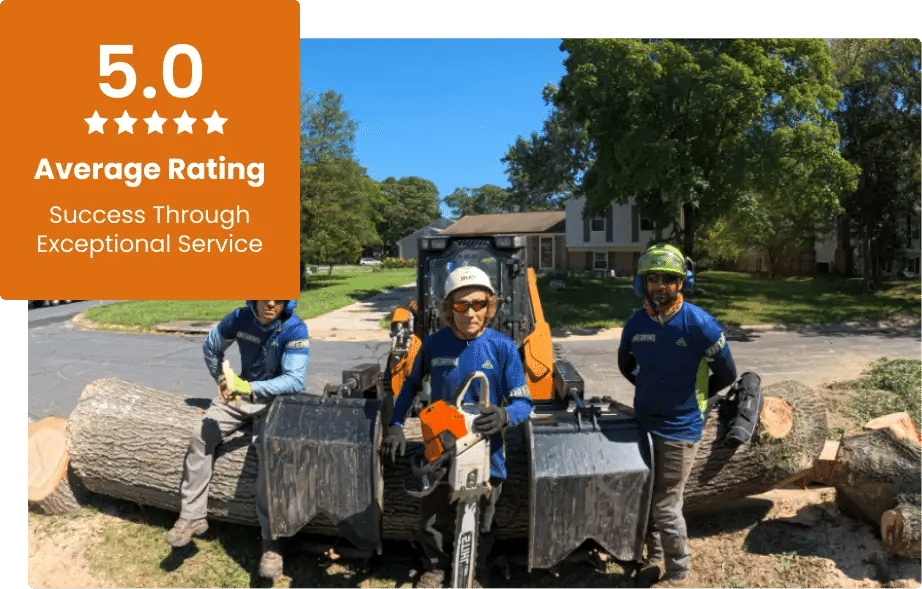
When a storm damages trees on your property in Southern Maryland, time matters but so does calling the right team. Based in Mechanicsville, MD, Empire Tree Services provides 24/7 emergency tree response across St. Mary’s, Charles, and Calvert Counties, with same-day appointments available for urgent situations. Our experienced crews handle everything from fallen tree removal, land clearing & debris cleanup, commercial tree services, forestry mulching, and stump grinding & removal.
What sets Empire Tree Services apart is a combination of professional-grade equipment, advanced rigging techniques, and a commitment to leaving your property safer, cleaner, and better than they found it.
We are fully licensed, bonded, and insured, carry a BBB A+ rating, and bring over 60 years of combined experience to every job. Empire Tree Services also handles insurance claim assistance and permitting support, so you are not navigating that process alone.
Whether you are dealing with a massive pine across your driveway in La Plata, storm debris scattered across a commercial property in Prince Frederick, or a dangerous hanging limb over your roof in Hollywood, Empire Tree Services has the crew and the equipment to handle it safely and efficiently.
Call (240) 249-7773 for 24/7 emergency tree service, or request a free estimate online at Empire Tree Services.
Frequently Asked Questions About Storm-Damaged Trees by the Homeowners in Southern Maryland
What should I do first if a tree falls on my house during a storm in Southern Maryland?
Do not enter the structure until it has been assessed for structural safety. Call 911 if there is immediate danger, then contact a licensed emergency tree service like Empire Tree Services. Document the damage thoroughly with photos before any cleanup begins, and notify your homeowner’s insurance company as soon as possible.
How quickly can Empire Tree Services respond to emergency storm damage?
Empire Tree Services operates 24/7 and offers same-day emergency appointments. Call (240) 249-7773 immediately to secure the earliest available slot, especially during widespread storm events when demand is high across Southern Maryland.
Can a storm-damaged tree be saved, or does it always need to come down?
Not always. Trees that have lost less than a third of their canopy and have an intact trunk and root system can often recover with professional pruning and care. A professional assessment is the most reliable way to determine whether removal or restoration is the right course of action.
Is it safe to remove small fallen branches myself after a storm?
Small branches under approximately three inches in diameter that are clearly lying flat on the ground with no tension can often be handled carefully by homeowners. Any limb that is pinned under another object, hanging in a tree, or near a structure or power line should be left for a professional crew.
Will my homeowner’s insurance cover storm tree removal in Maryland?
Most homeowner’s insurance policies cover emergency tree removal when the tree has fallen on a covered structure such as your home, garage, or fence. Coverage for trees that fell in an open area varies by policy. Empire Tree Services works directly with insurance companies to assist with billing and documentation.
How do I know if a leaning tree after a storm is an emergency?
Any tree that was not leaning before the storm and is now angled significantly should be treated as a potential emergency. Post-storm leaning typically indicates root plate failure or underground root damage, which means the tree could fall at any time. Keep people and vehicles away from the fall zone and call a professional immediately.
Summary Checklist: Post-Storm Tree Damage Response
| Situation | Action Required | Call a Pro? |
| Tree Down Near Power Lines | Call 911 and your utility provider immediately. | Yes. Before any tree work begins. |
| Large Limb on Roof or Structure | Document the damage and stay out of the structure if unsafe. | Yes. Immediate response required. |
| Hanging Broken Limbs in the Canopy | Keep everyone away from the area below. | Yes. Hanging limbs are unpredictable. |
| Tree Leaning After a Storm | Keep people away from the potential fall zone. | Yes. Root damage is likely. |
| Small Limbs Under 3 Inches with No Tension | Clean up carefully using proper safety equipment. | Optional. |
| Visible Trunk Cracks or Splits | Stay away from the base of the tree. | Yes. Structural failure risk is high. |
| Uplifted Stump or Root Ball | Do not try to push the tree back into place. | Yes. Root and soil assessment is required. |
Final Advice
The most costly mistake Southern Maryland homeowners make after a storm is not waiting too long to act; it is acting too fast without the right help. Rushing into a yard full of storm debris with a chainsaw and good intentions is how manageable property damage turns into serious injury or far more expensive structural repairs.
Hiring an experienced tree service firm in Southern Maryland will help you in assessing calmly, documenting thoroughly, and identifying the genuine hazards before doing anything else. Treat power lines as live. Keep children and pets away from fallen trees. And for anything beyond small, clearly safe debris, call a licensed, insured professional who handles this kind of work every day. If you are in St. Mary’s, Charles, or Calvert County, that call should go to Empire Tree Services at (240) 249-7773. We are available around the clock, respond the same day, and bring the experience, equipment, and insurance coverage to handle whatever the storm left behind safely, efficiently, and without making it worse.