
February 23, 2026
Living in Huntingtown, Maryland, offers beautiful scenery and a close connection to nature. However, with that beauty comes the responsibility of managing the trees on your property, especially as storm season approaches. Our local climate, with its warm, wet summers and the Atlantic hurricane season, means our trees face significant challenges. Knowing when and how to spot dangerous trees is crucial for protecting your home and family.
Key Takeaways
- Empire Tree Services helps Huntingtown homeowners identify and address dangerous tree issues before severe weather strikes, ensuring property safety.
- The best time for a comprehensive tree inspection in Huntingtown is late spring to early summer, ahead of the peak storm season.
- Key indicators of dangerous trees include leaning, visible cracks, dead branches, fungal growth, and root problems.
- Understanding Calvert County’s specific regulations, especially in the Critical Area, is vital for proper tree care and removal.
- Proactive professional assessment can prevent costly emergency tree removals and property damage.
The Short Answer: When to Schedule
You don’t want to wait until a major storm is bearing down on Calvert County to realize you have a hazardous tree. The ideal window for a thorough tree inspection in Huntingtown is late spring to early summer. This timeframe, typically from April through July, allows you to assess trees while they are in full leaf, making it easier to spot issues like thinning canopies or unusual leaf discoloration. More importantly, it gives you ample time to address any identified problems before Maryland’s tropical storm activity peaks, usually from August through October.
Huntingtown Seasonal Breakdown
Huntingtown’s humid subtropical climate brings distinct seasons, each presenting unique challenges and opportunities for observing tree health. Understanding these seasonal shifts helps you stay ahead of potential hazards.
Spring (March to May)
Spring in Huntingtown, from March to May, is a time of renewal. Trees are budding and leafing out, making it an excellent period to observe their overall vigor. Look for:
- Late or Sparse Leafing: If a tree is slow to produce leaves or has significantly fewer leaves than usual, it could indicate root problems or disease.
- Unusual Growth: Keep an eye out for sprouts at the base of the tree or along the trunk, which can signal stress.
- Winter Damage: Inspect for any lingering damage from ice storms or heavy snow that occurred during the colder months, such as broken branches or trunk splits.
Summer (June to August)
Summer, from June to August, is when trees are in their prime, but it’s also when Huntingtown begins to feel the effects of the Atlantic hurricane season. The average high in July hovers around 86-87°F, and these months are typically the wettest, with heavy rainfall. This combination of heat and moisture can stress trees and expose weaknesses. During this time, look for:
- Sudden Leaf Drop or Wilting: Trees under stress from drought, disease, or insect infestations may prematurely drop leaves or show signs of wilting.
- Fungal Growth: Warm, humid conditions are perfect for fungal development. Mushrooms or conks appearing on the trunk or at the base are clear indicators of internal decay.
- Storm Damage: After summer thunderstorms, immediately inspect trees for broken limbs, leaning, or any new cracks.
Fall (September to November)
Fall in Huntingtown, from September to November, brings beautiful foliage but also the highest threat of tropical storm activity for Maryland. This period, especially August through October, is critical for tree safety. As leaves change color and drop, structural issues become more visible. Watch for:
- Visible Deadwood: With leaves gone, dead or decaying branches become much easier to spot. These are prime candidates for breaking during high winds.
- Trunk Cracks and Splits: Inspect the trunk and major limbs for any new or worsening cracks that might have been hidden by foliage.
- Heaving Soil: Look for soil mounding or cracks around the base of the tree, indicating root instability, which is a major concern before winter storms.
Winter (December to February)
Winter, from December to February, is very cold in Huntingtown, with average lows in January around 25-30°F and about 15-16 inches of snow annually. While trees are dormant, the bare branches make structural problems incredibly apparent. Be vigilant for:
- Broken or Hanging Branches: Ice and snow can cause branches to snap. Identify any branches that are broken but still hanging in the canopy, posing a fall risk.
- Weak Crotches: Inspect where branches meet the trunk. Narrow V-shaped crotches are structurally weaker and more prone to splitting under weight.
- Tree Form: Without leaves, it’s easier to see if a tree has an unbalanced canopy or poor structure that could make it vulnerable to high winds.
Weather Conditions That Affect Timing in Huntingtown
Huntingtown’s weather patterns, especially during the Atlantic hurricane season (June 1 through November 30), significantly influence tree stability and the timing of necessary interventions. The average annual rainfall of 44-48 inches, often concentrated in summer and early fall, can saturate the soil, making trees more susceptible to uprooting during strong winds.
- High Winds: Gusts from tropical storms or severe thunderstorms can exert immense pressure on tree canopies. Trees with internal decay, weak branch attachments, or compromised root systems are highly vulnerable to snapping or falling.
- heavy rainfall: Prolonged or heavy rain saturates the soil, reducing its ability to anchor tree roots. This makes even healthy-looking trees more prone to uprooting when combined with strong winds.
- Ice and Snow: While less common during the traditional ‘storm season,’ winter weather in Calvert County can bring ice storms or heavy snow. These add significant weight to branches, causing them to break or leading to entire tree failures, especially if the tree already has structural weaknesses.
- Drought Stress: Paradoxically, periods of drought can also weaken trees, making them more susceptible to disease and insect infestations. A weakened tree is less resilient when a storm eventually hits.
Signs It Is Time to Act Now
Recognizing the warning signs of a dangerous tree is the first step in preventing serious damage to your property in Huntingtown. These signs often develop over time, so regular observation is key. If you spot any of these indicators, it’s time to consider professional help.
- Leaning Trees: A tree that has developed a sudden or significant lean is a major red flag. Look for mounding soil or cracks in the ground around the base on the opposite side of the lean, which indicates root failure.
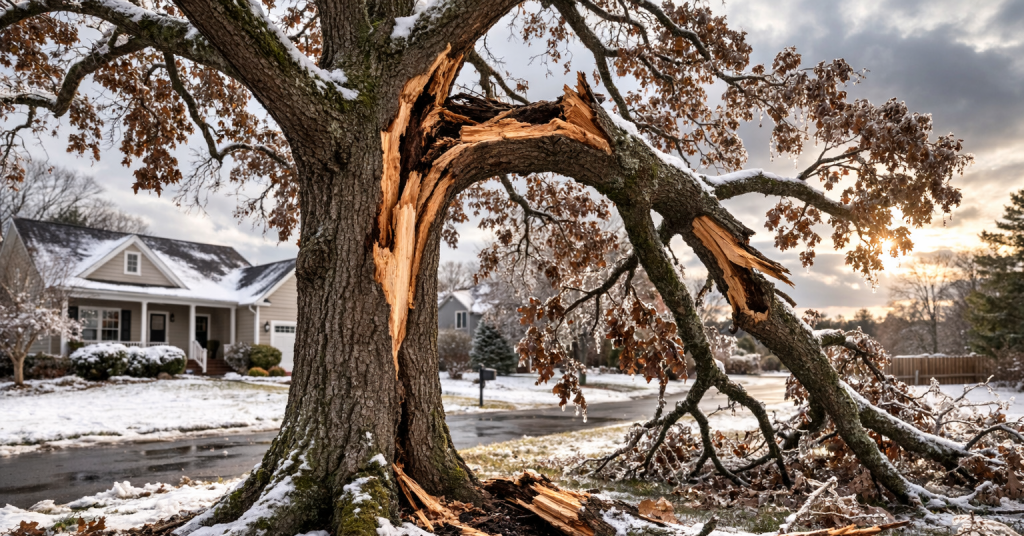
- Cracks or Splits: Deep, vertical cracks or splits in the trunk or major limbs signal significant structural damage. These areas are weak points that can fail completely during high winds or under heavy loads.
- Dead or Decaying Branches: Branches that are brittle, lack leaves when they should have them, or have no bark are dead. Excessive deadwood in the canopy, or a thinning crown, suggests underlying health issues and increases the risk of falling limbs.
- Fungal Growth: The presence of mushrooms, conks, or other fungal bodies at the base of the tree, along the trunk, or on major limbs often indicates internal decay and rot. This can severely weaken the tree’s core structure.
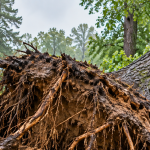
- Root Problems: Exposed roots, heaving soil around the tree’s base, or visible root rot can compromise a tree’s anchorage. Roots severed by nearby construction or trenching also make a tree highly vulnerable to uprooting.
- Hollow Spots: If the trunk sounds hollow when tapped, it likely has significant internal rot. This decay can proceed unseen for years, hollowing out the tree from the inside, leaving only a thin outer shell.
- Impact of Recent Construction: Nearby excavation, changes in soil grade, or heavy machinery operation can severely damage a tree’s root system. Even if the tree looks fine immediately afterward, it can become unstable over time.
Local Angle: Trees and Regulations in Calvert County
Living in Huntingtown, part of beautiful Calvert County, means you’re often close to natural waterways and sensitive ecological areas. This proximity comes with specific local regulations that homeowners need to be aware of when dealing with trees, especially those that might be dangerous. Calvert County’s humid subtropical climate, with its warm, wet summers and potential for tropical storms, makes these regulations even more critical.
Calvert County’s Critical Area Regulations
Calvert County is home to extensive areas designated as the Critical Area. This includes properties within 1,000 feet of tidal waters or adjacent to non-tidal wetlands. If your property falls within this zone, tree removal and even significant pruning are subject to stricter rules. For example, removing any vegetation, including living and dead trees, typically requires a Critical Area Vegetation Removal Permit Application from the county. Even if a tree is dead or dying, you generally need a permit and may be required to submit photographs, a site plan, and proof of ownership. A $75 fee applies for these permit reviews. To learn more about Huntingtown and its location within Calvert County.
Understanding the Buffer Zone
Within the Critical Area, a 50-100-foot buffer exists along tidal waters or wetlands. Removing trees within this Buffer is highly restricted. Generally, trees can only be removed if they are dead, dying, diseased, or creating a hazard, and often require a Buffer Management Plan. This ensures ‘no net loss of forest or developed woodland cover,’ meaning replacement planting may be required, sometimes at a higher than 1:1 ratio. This is a crucial detail for Huntingtown residents, as missteps can lead to fines or mandated replanting.
Other Important Regulations
Beyond the Critical Area, other regulations apply. For instance, a Non-Critical Area Vegetation Removal Permit is needed if you’re removing more than 20 trees or disturbing an area of 5,000 square feet or greater. Additionally, any work on trees within a public road right-of-way requires a Tree Care Permit from the Maryland Department of Natural Resources (DNR) Forest Service. Work for compensation on these roadside trees must be performed by a DNR Licensed Tree Expert (LTE). These regulations are designed to protect our natural resources and ensure safe, responsible tree care across Calvert County.
Local Insight Section: What Most Residents Miss
Many Huntingtown residents focus on the obvious signs of tree danger, like a tree leaning sharply or a large limb breaking off. However, what often gets missed is the subtle, yet critical, impact of internal decay and root system health, especially in the context of our local regulations. The big impact here is that a tree can look perfectly healthy on the outside, with a full canopy and no visible cracks, but be a ticking time bomb due to internal rot. This is particularly true for older trees or those that have experienced past injuries.
- Hidden Internal Decay: Fungal conks or mushrooms are often the only external signs of extensive internal decay. This decay can hollow out a tree, making it incredibly unstable, even if it appears robust. A tree with significant internal rot might stand firm for years until a strong gust of wind or heavy rain during storm season finally exposes its weakness.
- Compromised Root Systems: Root problems are often invisible until it’s too late. Construction near a tree, changes in drainage, or even past landscaping efforts can damage roots, leading to instability that only becomes apparent during a severe storm. Heaving soil around the base, even if slight, can be a major indicator.
- Overlooking Critical Area Permits: Many homeowners are unaware of the specific permit requirements for tree removal within Calvert County’s Critical Area. Removing a seemingly dangerous tree without the proper permits can lead to significant fines and mandatory, costly mitigation efforts, including replanting. This is a detail that can have a huge financial and legal impact.
- Ignoring Small Cracks: A small, seemingly insignificant crack in the trunk or a major limb might be dismissed. However, these small cracks can widen over time, especially with the stress of wind and rain, eventually leading to a catastrophic failure. Catching these early can allow for bracing or targeted pruning, saving the tree or preventing an emergency.
Expert Tip / When to Call
When it comes to identifying and addressing dangerous trees, a professional opinion is invaluable. While you can certainly look for the signs we’ve discussed, an experienced arborist has the training and tools to assess internal tree health, root integrity, and potential risks that might not be visible to the untrained eye. Pro tip from Empire Tree Services: Don’t hesitate to call for an assessment if you have any doubts. It’s always better to be safe than sorry, especially with the unpredictable weather patterns we experience in Huntingtown. We often advise scheduling an inspection in late spring or early summer, allowing ample time for any necessary tree work before the peak of tropical storm season.
Frequently Asked Questions
When is the ideal time to inspect trees for danger in Huntingtown, MD?
The best time for a thorough tree inspection in Huntingtown is typically late spring to early summer, before the peak of the Atlantic hurricane season, which runs from June 1 through November 30. This allows enough time to identify issues while trees are in full leaf and address them before severe weather arrives.
What are the most critical signs of a hazardous tree?
Several signs indicate a dangerous tree, including severe leaning, large cracks or splits in the trunk, extensive dead branches, fungal growth at the base, and heaving soil around the roots. Any of these could mean the tree is structurally compromised and poses a risk.
Do I need a permit to remove a dangerous tree in Huntingtown, MD?
In Calvert County, especially within the Critical Area (1,000 feet of tidal water), permits are often required for tree removal, even for dead trees. It’s crucial to check with Calvert County Planning & Zoning and the Maryland DNR Forest Service before removing any tree, particularly those near public roads or water bodies.
Can heavy rain make a tree more dangerous during a storm?
Yes, heavy rain can saturate soil, making trees with compromised root systems more prone to uprooting. Strong winds combined with wet soil significantly increase the risk of tree failure during storms. This is especially true during Huntingtown’s wettest months, typically July, August, and September.
Can I assess and remove a dangerous tree myself?
While some minor pruning can be done by homeowners, assessing and removing dangerous trees requires specialized knowledge and equipment. Professional arborists can safely identify risks, recommend appropriate actions, and ensure work is done according to local regulations. For serious hazards, it’s always best to call a professional tree service.
What constitutes a tree emergency?
If you notice a sudden crack, a significant lean, or a large hanging branch after a storm, it’s considered an emergency. You should immediately contact a professional tree service for emergency assessment and removal. Swift action can prevent further damage or injury. Learn more about our emergency services on our tree removal services page.
Final Takeaway for Huntingtown Homeowners
Being proactive about tree health and safety in Huntingtown is essential, especially with our unique local climate and storm seasons. Regular inspections and understanding the signs of dangerous trees can save you from potential property damage and costly emergencies. Don’t wait until a storm hits to assess your trees. Ready to get started? Contact Empire Tree Services today for a professional assessment and ensure your property is safe and sound. Visit Localtreeman.com to learn more about our services.