
August 13, 2026
Key Takeaways
- Tree removal looks simpler than it is; the danger is rarely in the cutting itself but in predicting how the tree will fall.
- A single miscalculation can send a tree into a house, a power line, a vehicle, or a person.
- DIY removal often costs more in the end once property damage, injury, or a botched job requiring professional cleanup is factored in.
- Homeowners insurance may not cover damage caused by DIY tree work gone wrong.
- Certain trees, like those near power lines, leaning trees, or large trees close to structures, should never be attempted without professional equipment and training.
- A free estimate from a licensed tree service often costs less than homeowners expect, especially compared to the risk involved in doing it yourself.
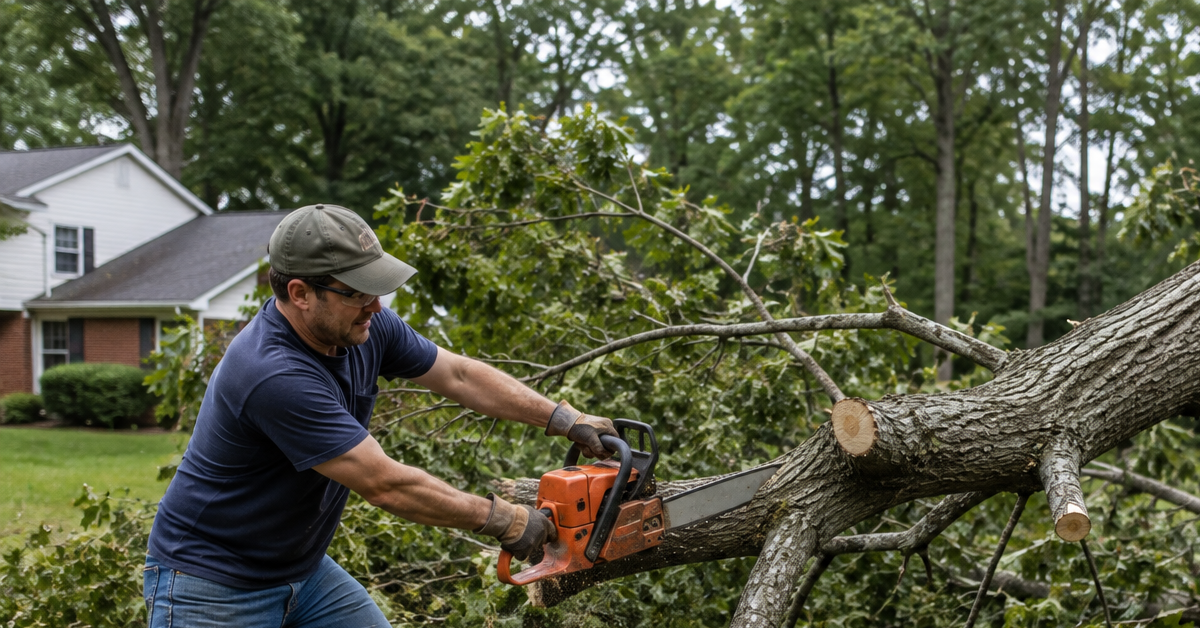
A chainsaw, a rope, and a YouTube tutorial can make tree removal look like a weekend project. For a small, isolated tree far from anything valuable, that might even be true. But most of the trees homeowners actually want removed, whether it’s a large oak near the house, a leaning pine over the driveway, or a storm-damaged tree close to a power line, involve risks that aren’t obvious until something goes wrong. Understanding what actually makes tree removal dangerous helps explain why professional tree removal firm Mechanicsville, MD approaches it so differently than a homeowner with a chainsaw and good intentions.
Cutting a Tree Down Is the Easy Part
Most people assume the danger in tree removal is the chainsaw itself, and while cutting tools carry real risk, they’re not actually the hardest part of the job. The real challenge is controlling exactly where and how a tree falls. A tree’s weight isn’t distributed evenly. Lean, wind, the location of major limbs, and even slight variations in the trunk can all shift a tree’s center of gravity, meaning a cut that looks correct on paper can still send a tree in an unexpected direction.
Professional crews spend as much time assessing a tree, its lean, its weight distribution, obstacles in every direction, before making a single cut as they do actually cutting it down. That assessment is exactly the step most DIY attempts skip, because it’s not obvious from the ground that it’s even necessary.
What Actually Goes Wrong
The most common DIY tree removal accidents don’t happen because someone used the wrong tool. They happen because of a handful of predictable mistakes:
- Misjudging the fall direction: A tree that looks like it’s leaning one way can still fall differently once the trunk is weakened by cutting, especially with wind or uneven weight in the canopy.
- Not accounting for barber-chairing: This happens when a tree splits vertically while being cut, causing the upper portion to kick back violently toward the person cutting it, often with little warning.
- Underestimating the size and weight involved: A branch or trunk section that looks manageable on the ground can weigh far more than expected, and even a professional crew never positions themselves directly under material that’s being cut.
- Cutting near power lines without training: Contact with an energized line can be fatal, and tree limbs don’t need to touch a line directly for electricity to arc.
- Using a ladder instead of proper rigging: Chainsaw work from a ladder removes any stable footing and leaves no way to react if the tree or branch moves unexpectedly.
- Not having a clear escape path: Professional crews always plan and clear a retreat route before a tree starts to fall. Without one, there’s no way to get clear if something goes wrong.
Each of these mistakes is rare enough that most people who attempt DIY tree removal never experience one. But when something does go wrong, the consequences are severe, which is why tree work consistently ranks among the more dangerous jobs a homeowner can take on.
The Real Cost of a DIY Mistake
A tree removal quote can feel like an easy expense to avoid, especially for a tree that looks straightforward. But the math changes quickly once a DIY attempt goes wrong. A tree that falls in the wrong direction can damage a roof, a fence, a vehicle, or a neighbor’s property, and repairs from that kind of damage routinely cost far more than professional removal would have. An injury requiring emergency medical care adds another layer of cost that has nothing to do with the tree itself.
Homeowners insurance is another factor people don’t always consider. Many policies cover storm damage or tree failure that happens on its own, but coverage becomes murkier when the damage results directly from a homeowner’s own tree removal attempt. That’s a conversation worth having with an insurance provider before, not after, attempting DIY removal.
Trees That Should Never Be a DIY Project
Some trees carry enough risk that professional removal isn’t just recommended, it’s close to a necessity:
- Any tree within falling distance of power lines. This work requires coordination with the utility company in many cases and specialized training to do safely.
- Large trees near the house, garage, or other structures. The margin for error shrinks considerably when a wrong call could mean the tree lands on the roof instead of the yard.
- Leaning or storm-damaged trees. These often have already-compromised structural integrity, which makes their fall behavior far less predictable than a healthy tree.
- Trees requiring significant height work. Anything that can’t be safely reached from the ground or a stable ladder typically requires climbing gear, rigging, or a crane, all of which take training to use safely.
- Trees in tight spaces. When a tree has to come down in sections to avoid a fence, shed, garden, or neighboring property, that kind of controlled dismantling is a different skill set entirely from felling a tree in an open field.
What Professional Removal Actually Involves
A professional crew brings more than just experience with a chainsaw.
- Rigging systems allow limbs and trunk sections to be lowered in a controlled manner rather than dropped.
- Cranes can lift and remove large sections when a tree is too close to a structure to fall traditionally.
- Proper personal protective equipment, from chaps to helmets with face shields, reduces injury risk during the cutting itself. And perhaps most importantly, trained crews know how to read a tree’s lean, weight, and internal condition in ways that come from years of doing the work, not a single afternoon of research.
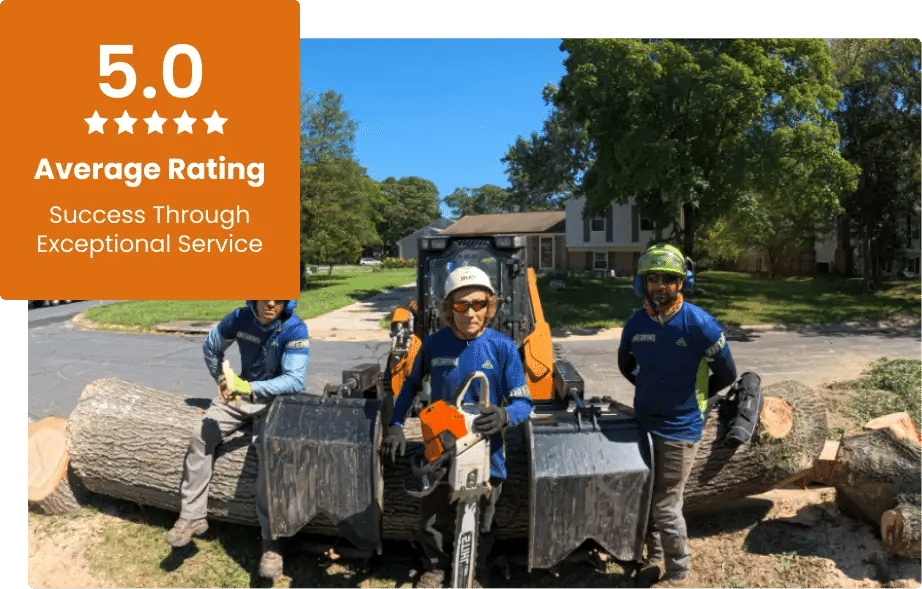
At Empire Tree Services, our crews bring over 60 years of combined experience to every removal, whether it’s a small tree in an open yard or a large, structurally compromised tree close to a home. We are licensed, bonded, and insured, which protects both our crew and your property throughout the job. Empire Tree Services also handle the permitting and insurance coordination that often comes with larger removals, something that’s easy to overlook until it becomes a problem.
If you’re weighing whether to remove a tree yourself, the smartest first step is a free estimate. In many cases, professional removal costs less than homeowners expect, especially once the risk of DIY work is factored in. Call Empire Tree Services at (240) 249-7773 to get a free, no-obligation quote before you pick up a chainsaw.
Frequently Asked Questions About DIY Tree Removal in Mechanicsville, Maryland
Is it ever safe to remove a small tree myself?
For a small, healthy tree in an open area, away from structures, power lines, and fences, a careful homeowner with the right equipment can sometimes manage it. Anything larger, leaning, or near a structure is a different story.
How much does professional tree removal typically cost compared to doing it myself?
Costs vary by tree size and location, but professional removal often ends up cheaper than expected, especially compared to the potential cost of repairing damage from a DIY mistake. A free estimate is the best way to compare.
Will my homeowners insurance cover damage from a DIY tree removal gone wrong?
It depends on the policy, but damage resulting directly from a homeowner’s own tree work is often treated differently than damage from a tree falling on its own. It’s worth checking with your insurance provider beforehand.
What’s the most dangerous part of removing a tree?
Predicting and controlling the direction a tree falls is generally the most dangerous part, along with any work near power lines or in tight spaces close to structures.
Do I need a permit to remove a tree on my own property?
It depends on the county and whether the property falls within a designated Critical Area. A professional tree service can advise on permitting requirements before work begins.
Why do professional crews use ropes and rigging instead of just cutting the tree down?
Rigging allows crews to control exactly where and how fast a limb or trunk section comes down, which prevents damage to the surrounding property and reduces injury risk compared to letting material fall freely.
What should I do if I already started removing a tree and it feels unsafe to finish?
Stop immediately and call a professional. A partially cut tree can be more unpredictable than one that hasn’t been touched, and a trained crew can safely assess and finish the job.
Summary Checklist: When to Hire a Professional for Tree Removal
| Condition | Risk Level | Recommended Action |
| Tree Near Power Lines | Critical | Call a licensed professional immediately. Never attempt DIY cutting. |
| Large Tree Close to Structures | High | Schedule professional removal using proper rigging or crane equipment. |
| Leaning or Storm-Damaged Tree | High | Hire an arborist to assess structural integrity before attempting work. |
| Tree Requiring Work at Height | High | Use a professional crew equipped with climbing gear and safety systems. |
| Partially Cut or Unstable Tree | Critical | Stop all work immediately and contact emergency tree services. |
Final Advice
Tree removal may look simple but the risks involved can quickly turn a small task into a costly mistake. Before picking up a chainsaw, homeowners should consider factors like tree size, structural condition, nearby buildings, power lines, and the direction the tree could fall. Many hazards are not visible from the ground and require professional experience to identify. Hiring a licensed tree service ensures the job is completed with the right equipment, safety practices, and techniques to protect your property. Getting a free estimate is often the safest first step and can help you understand the true cost before taking unnecessary risks. For Southern Maryland homeowners, professional tree removal is not just about convenience, it is about protecting your home, family, and investment.
Empire Tree Services provides safe and reliable tree removal solutions backed by experience and proper equipment. Call (240) 249-7773 to schedule a free evaluation before attempting a dangerous DIY removal.