
September 29, 2026
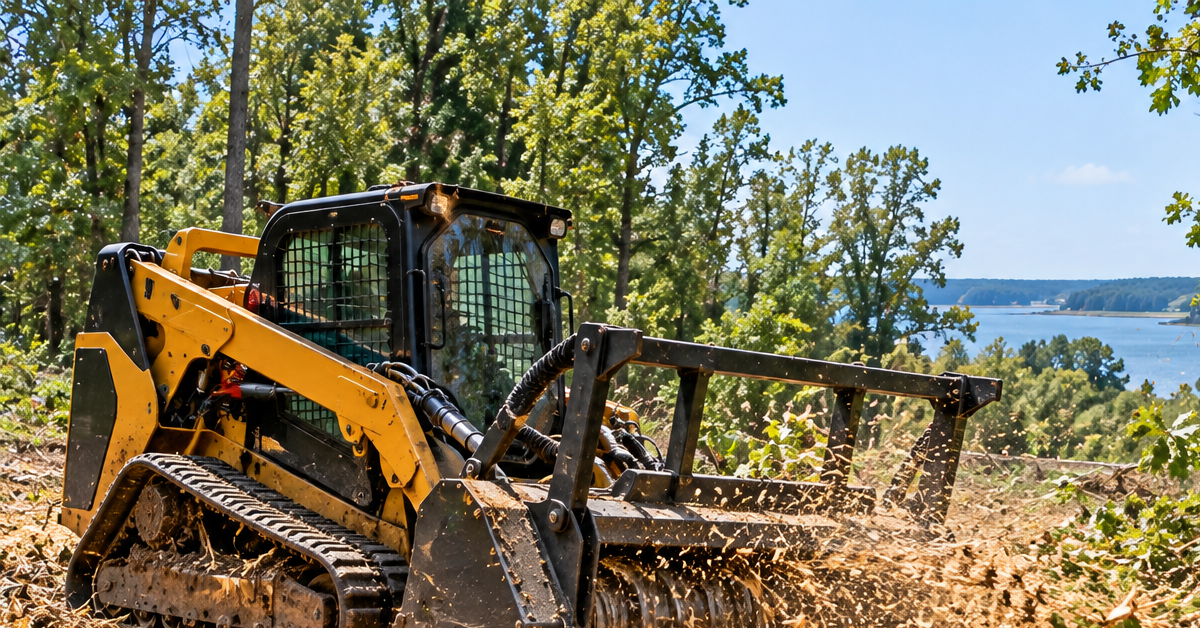
Forestry mulching often makes more sense when a property owner wants to control brush, vines, saplings, and smaller unwanted growth without stripping the site to bare soil. It processes suitable vegetation on-site and leaves organic material behind, reducing how much debris must be loaded and transported.
Hauling material away is usually more appropriate when the project involves large trees, unstable trees, complete stump removal, excavation, grading, or a clean surface for construction. Some properties need both methods. Selected trees and unusable debris can be removed while suitable understory vegetation is mulched in place.
At Empire Tree Services, we start with the intended use of the land. A trail through wooded acreage requires a different finish than a building pad, septic area, pasture, commercial site, or landscaped yard.
What Is Forestry Mulching?
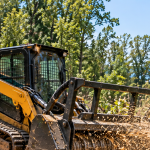
Forestry mulching processes suitable trees, brush, saplings, vines, and other vegetation at or near ground level. The processed material stays on the property as a layer of organic debris.
This method can open overgrown areas without requiring every piece of vegetation to be cut, stacked, loaded, and transported. It is commonly considered for trails, access lanes, fence lines, field edges, selective clearing, and the recovery of areas overtaken by dense growth.
Forestry mulching does not produce the same result as excavation or grading. Roots usually remain in the soil, larger stumps may remain, and the finished surface contains processed material. Our forestry mulching service information provides more detail about the service itself.
What Does Hauling Away Trees and Brush Involve?
Haul-away clearing removes selected material from the site after it is cut or gathered. The work may include staging, loading, transportation, and disposal or processing elsewhere.
Removing debris can leave more room for later grading, construction, landscaping, or utility work. It may also be necessary when material should not remain on the property. However, hauling branches and logs away does not automatically include stump extraction, root removal, or final grading.
The required finish should be stated clearly before work begins. Our land clearing and debris cleanup services cover broader clearing needs when a property requires more than vegetation management.
How Does Forestry Mulching Compare With Haul-Away Clearing?
The main difference is where the vegetation ends up and what condition the property needs afterward. Forestry mulching leaves processed material on-site, while haul-away clearing removes designated debris from the property.
| Decision factor | Forestry mulching | Haul-away clearing |
| Typical purpose | Manage overgrowth and improve access | Remove material for a cleaner or more open site |
| Suitable material | Often brush, vines, saplings, and smaller vegetation | May include brush, branches, logs, and separately cut trees |
| Material remaining | Processed organic material remains | Designated debris is transported away |
| Stumps and roots | Usually not fully excavated | Can be addressed separately if included in the scope |
| Soil disturbance | May avoid broad excavation, but equipment still affects the site | Depends on cutting, loading, stump work, and grading requirements |
| Finished condition | Mulched surface with roots and some stumps potentially remaining | Cleaner surface, with the exact finish based on the contract |
| Common next uses | Trails, access, selective clearing, field-edge recovery | Construction, utilities, landscaping, grading, or debris removal |
| Main limitation | Mulch, roots, larger wood, and obstacles may remain | Requires space for handling material and off-site transportation |
Neither method is automatically cheaper, faster, or less disruptive. Vegetation, access, ground conditions, disposal needs, and the desired finish determine the practical choice.
When Does Forestry Mulching Make More Sense?
Forestry mulching makes more sense when suitable vegetation can remain on-site after processing and the next use does not require excavation. It is especially useful when the goal is selective access or vegetation control rather than a bare, construction-ready surface.
Clearing Dense Brush, Vines, and Saplings
Mulching can be a practical choice when smaller unwanted growth is the main obstacle. Dense brush, tangled vines, young trees, and overgrown field edges can often be processed without handling each piece separately.
The material must still be suitable for the work area. Hidden wire, metal, dumped trash, rocks, or concrete can change the plan. Large trunks and unstable trees may require separate removal before smaller vegetation is addressed.
Opening Trails, Fence Lines, and Access Routes
Mulching may fit a project that needs usable access without complete clearing. Trails, fence lines, sightlines, and routes into wooded acreage often need selected vegetation removed while nearby trees remain.
The planned width, turning space, slope, and future traffic should be defined first. A route intended for occasional walking has different needs from one that must support farm vehicles, emergency access, utilities, or construction equipment.
Reclaiming Overgrown Land Without Removing Everything
Forestry mulching can help reclaim an overgrown area while preserving selected trees and established vegetation. The work can focus on unwanted understory growth instead of clearing the entire site.
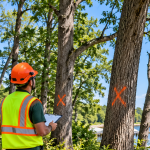
Desirable trees should be identified and marked before equipment enters the area. Their trunks, exposed roots, and surrounding soil still need protection. Selective clearing also requires enough operating space to work around retained trees without damaging them.
Reducing the Amount of Material Transported Off-Site
Mulching may reduce hauling when much of the vegetation can be processed and left on the property. This avoids creating large brush piles that later require loading and transport.
Reduced hauling does not mean no debris management will be needed. Oversized logs, trash, storm-damaged wood, unsuitable material, and obstacles may still have to be separated and removed.
Preparing Land for a Use That Accepts a Mulched Surface
Forestry mulching makes sense when the next phase can proceed with processed vegetation, roots, and some stump material remaining. Possible uses include walking trails, managed woodland, access corridors, view openings, or early-stage pasture recovery.
Mulching alone is usually not final site preparation for a foundation, paved road, utility trench, or septic installation. Those uses may require excavation, compaction standards, grading, drainage work, and removal of buried material.
When Is Hauling Trees and Brush Away the Better Choice?
Hauling is often the better choice when the material cannot remain or the next phase requires a cleaner, more accessible surface. It is also more appropriate when vegetation is too large, unstable, contaminated, or restricted for on-site processing.
Haul-away work may be needed for:
- Large mature trees or oversized logs that require separate handling
- Dangerous, leaning, or storm-damaged trees that need controlled removal
- Construction pads, foundations, driveways, utilities, or septic work
- Projects requiring stump extraction or extensive root removal
- Sites that need grading or exposed soil for the next contractor
- Diseased or regulated material that must follow specific disposal directions
- Contaminated debris or vegetation mixed with trash, wire, metal, or concrete
- Properties where a mulch layer would interfere with planting, drainage, or construction
- Work areas subject to rules requiring a particular removal or disposal method
A large or structurally unstable tree should not be treated like ordinary brush. Our tree removal services address controlled removal when standing trees must come down before broader clearing continues.
Can Forestry Mulching and Haul-Away Clearing Be Combined?
Yes. A combined plan is often the most practical choice when a site contains different vegetation sizes, hazards, and finished-area requirements.
For example, selected mature trees may be cut and removed while saplings, brush, and vines are mulched. Stumps in a future building or driveway area may receive separate treatment, while stumps outside that footprint remain undisturbed.
Storm debris may also require sorting. Usable areas can be mulched after unstable trees and unsuitable material are handled through storm damage cleanup. A combined scope should identify which material stays, which material leaves, and which areas receive additional site work.
What Does Forestry Mulching Leave Behind?
Forestry mulching leaves a visible layer of processed woody and leafy material on the ground. The texture, depth, and distribution vary with the vegetation and site conditions.
A thick stand of brush can produce more material than a lightly overgrown trail. Woody stems may leave a coarser finish than leafy vegetation. The result may not resemble evenly installed landscape mulch, and it should not be described that way in the project scope.
The remaining layer can affect the next use. It may be acceptable for access, vegetation management, or a transitional land-use phase. It may need redistribution or removal where precise grading, turf installation, planting beds, or construction will follow.
Does Forestry Mulching Remove Stumps and Roots?
Forestry mulching does not automatically remove every stump or root system. It commonly processes vegetation near ground level while leaving below-ground roots in place.
Some surface material may be reduced, but that is different from grinding a stump to a specified depth or excavating the root system. Remaining stumps and roots can interfere with foundations, utilities, grading, pavement, pasture equipment, or future planting.
Property owners should decide where stumps can remain and where they cannot. Our stump grinding and removal options explain the separate treatments that may be added to a clearing plan.
What Site Conditions Can Limit Forestry Mulching?
Soft ground, steep slopes, limited access, and hidden obstacles can restrict where mulching equipment can operate. A site inspection is necessary because vegetation can conceal conditions that are not visible from the road.
Important site factors include:
- Entrance width, overhead clearance, and turning room
- Wet, soft, or poorly drained ground that may rut or compact
- Slopes, eroded areas, drop-offs, and unstable edges
- Buried or abandoned fencing, wire, posts, and metal
- Rocks, concrete, dumped debris, and construction waste
- Wells, septic tanks, drain fields, and underground utilities
- Homes, sheds, fences, roads, landscaping, and retained trees
- Streams, wetlands, tidal waters, drainage ditches, and protected buffers
Waiting for better ground conditions may be necessary on some properties. Forcing equipment onto saturated ground can damage the site and make later restoration more difficult.
How Should Southern Maryland Property Conditions Affect the Decision?
The clearing method should match each property’s terrain, drainage, vegetation, and planned use. Rural acreage in St. Mary’s County may need a different approach from a residential lot in Charles County or a sloped waterfront property in Calvert County.
Properties around Mechanicsville, Charlotte Hall, Hollywood, and Leonardtown may include wooded acreage, field edges, farm access, and long fence lines. Sites near La Plata, White Plains, Hughesville, and Port Tobacco may combine residential or commercial uses with drainage routes and restricted equipment space. Around Prince Frederick, Huntingtown, Port Republic, Lusby, and Dunkirk, slope and proximity to tidal or environmentally sensitive areas may influence the work plan.
These examples do not mean every parcel has the same soil or environmental restrictions. Ground conditions can change across one property because of grading, runoff, past development, and landscape position.
Do Environmental Rules Affect the Clearing Method?
Yes. Critical Area, wetland, forest-conservation, grading, erosion-control, and local clearing requirements may affect what can be cut, processed, disturbed, or removed.
Rules depend on the property and scope. St. Mary’s, Charles, and Calvert counties administer local requirements, while Maryland agencies regulate certain wetland and waterway impacts. A mulched finish does not automatically exempt vegetation disturbance from review.
Property owners should confirm current requirements before work begins, especially near tidal water, wetlands, streams, protected buffers, or recorded conservation areas. Our Critical Area permit information can help owners identify questions to raise during project planning. County or state officials make the final determination about required approvals.
What Affects the Cost of Forestry Mulching and Hauling?
Cost depends on the amount of work, the material being handled, site access, and the required finished condition. Forestry mulching is not automatically less expensive than haul-away clearing.
An estimate may be affected by:
- Total area and vegetation density
- Brush, vine, sapling, tree, and log sizes
- Number of desirable trees that require protection
- Ground moisture, slope, and operating room
- Rocks, metal, trash, fencing, and other obstacles
- Distance between the work area and staging or loading points
- Volume and type of material requiring off-site transport
- Stump grinding, root removal, grading, or cleanup needs
- Utility, septic, structure, roadway, and waterway constraints
- Permits, approved plans, and environmental protection measures
The lowest initial clearing price may not cover the finish required for the next phase. A property owner can avoid duplicated work by giving the clearing provider the construction, fencing, trail, pasture, or landscaping plan before requesting an estimate.
What Should a Written Estimate Include?
A written estimate should define the work limits, retained vegetation, debris plan, stump treatment, and expected finish. General terms such as “clear the lot” leave too much room for different interpretations.
The estimate should identify:
- The area to be mulched and the area to be cleared by other methods
- Trees and vegetation that will remain
- Large trees requiring separate cutting or removal
- Material that stays on-site and material that will be hauled away
- Stump and root treatment, if any
- Access routes, staging areas, and known obstacles
- Cleanup, grading, or redistribution of processed material
- Permit responsibilities and site-protection requirements
- Conditions that could require a revised scope
Commercial sites, HOAs, farms, and larger properties may also need work divided into phases. Our commercial tree service information provides context for projects involving broader property-management needs.
What Should You Ask Before Choosing a Clearing Method?
Ask questions that connect the clearing method to the finished result. The provider should be able to explain what will remain and what additional work may be needed.
Useful questions include:
- Is the vegetation suitable for on-site mulching?
- Which trees, logs, or debris require separate removal?
- Will any stumps or large roots remain?
- How much processed material is likely to stay on the ground?
- Could the mulch layer interfere with the next project phase?
- Can equipment reach the site without crossing septic, utilities, wet ground, or protected areas?
- How will desirable trees, fences, structures, and landscaping be protected?
- Does any material require special handling or off-site disposal?
- Are permits or environmental approvals likely to affect the scope?
- Is hauling, cleanup, grading, or stump work included in the estimate?
Answers should be specific to the parcel. Photos and measurements are useful for early discussion, but wooded or overgrown land often requires an on-site review before the scope is finalized.
How Can Empire Tree Services Evaluate Your Property?
Our team evaluates the vegetation, site access, ground conditions, obstacles, nearby property features, and intended land use. We then discuss whether mulching, haul-away clearing, or a combined approach fits the requested result.
We also look at which trees should remain, which material cannot be mulched, and whether stump work or controlled tree removal belongs in the scope. The purpose is to define the finish before work starts, not after the property has already been cleared.
Empire Tree Services works across our Southern Maryland service area, including communities in St. Mary’s, Charles, and Calvert counties. Site conditions and service availability should be confirmed for the specific property.
Choosing When Forestry Mulching Makes More Sense Than Hauling Away Trees and Brush
Forestry mulching makes more sense when suitable vegetation can remain as processed material and the property does not need immediate excavation or a bare finish. Hauling is generally more appropriate when large trees, stumps, regulated debris, construction plans, or clean-site requirements make on-site material unsuitable.
Many properties fall between those two choices. Removing selected trees and debris while mulching smaller vegetation can produce a more useful result than forcing one method across the entire site.
If you need help comparing the options, request a free estimate or contact Empire Tree Services. We can evaluate the property and prepare a scope based on what you want the land to support next.