
September 3, 2026
Key Takeaways
- A dead tree doesn’t have to be leaning or dropping branches to be dangerous; internal decay is often invisible from the ground.
- Common signs of a dead or dying tree include missing bark, brittle limbs, fungal growth, and a lack of leaf-out in spring.
- Southern Maryland’s Critical Area regulations can affect whether a permit is required, especially for trees near shorelines, wetlands, or in Charles, Calvert, and St. Mary’s Counties’ buffer zones.
- Dead trees near a home, driveway, or power line should be prioritized for removal over dead trees standing in open yard space.
- Professional removal is almost always safer and, in many cases, cheaper in the long run than a DIY attempt or an emergency call after the tree has already failed.
Trees die for all sorts of reasons in Southern Maryland: old age, storm damage, root disease, insect infestation, or years of poor drainage around the base. Whatever the cause, a dead tree doesn’t just sit quietly in the yard. Wood that’s no longer alive breaks down structurally over time, and there’s no way to predict exactly when a limb, or the whole tree, will come down. For homeowners in Mechanicsville, Leonardtown, Prince Frederick, La Plata, and the surrounding communities, knowing when a tree has crossed the line from “struggling” to “needs to come down” is one of the most important calls you can make for your property’s safety.
Why Dead Trees Are More Dangerous Than They Look
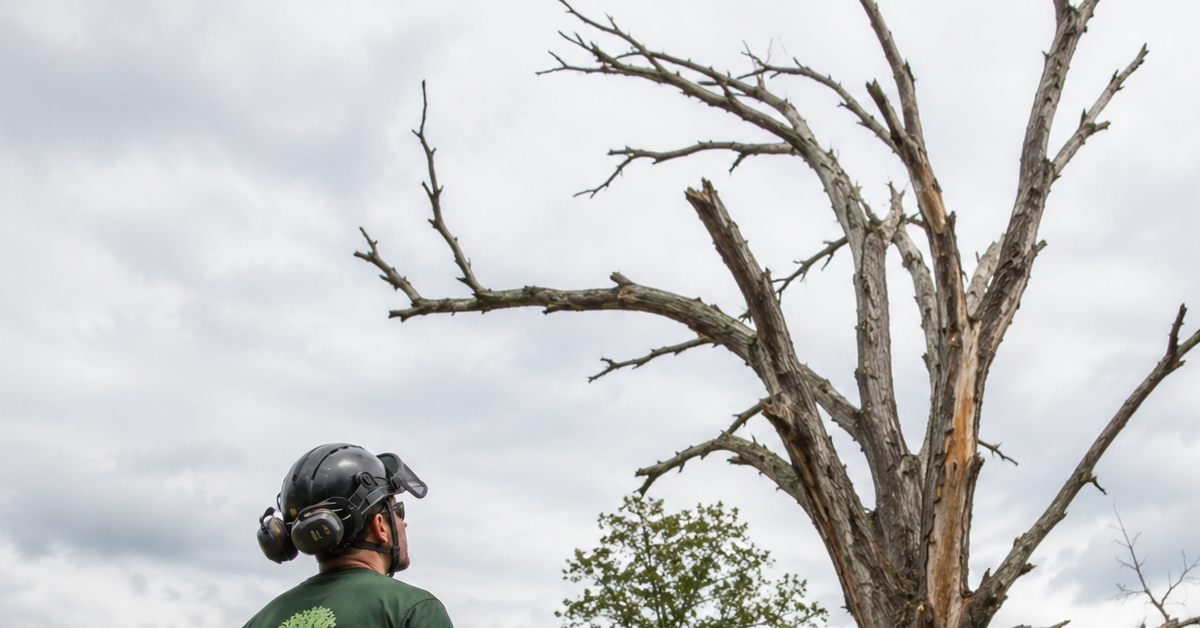
A tree that’s clearly dead bare branches, no bark, obviously hollow tends to get attention quickly. The more dangerous trees are the ones that still look mostly normal. A tree can be dying from the inside out for years while the outer canopy continues to leaf out, especially if only part of the root system or trunk has been compromised. That’s what makes dead and dying trees so unpredictable: decay isn’t always visible, and a tree that looked fine yesterday can fail during today’s thunderstorm.
Southern Maryland’s weather doesn’t help. Between summer thunderstorms, occasional tropical systems moving up from the Chesapeake, and winter ice, dead wood gets tested constantly throughout the year. A dead tree that might have stood for another season in calmer weather can come down much sooner here.
Signs a Tree Is Dead or Dying
A few warning signs tend to show up before a tree fails outright:
- No leaf-out in spring. If neighboring trees of the same species have leafed out and one hasn’t, that’s a strong signal.
- Missing or peeling bark. Bark that’s sloughing off in large sections, especially with no new growth underneath, usually points to a dead cambium layer.
- Brittle, dry branches. Snap a small branch, live wood bends and shows green underneath; dead wood snaps cleanly and is dry inside.
- Fungal growth at the base or trunk. Mushrooms, conks, or shelf fungus growing on the trunk or root flare are often a sign of internal decay.
- Deep cracks or cavities. Vertical cracks running up the trunk, or visible hollows, indicate structural weakness.
- Leaning that’s new or worsening. A tree that has recently started leaning, particularly after a storm or heavy rain, may have compromised roots.
- Bark beetle activity. Small exit holes in the bark, sawdust-like frass at the base, or peeling bark in patches can point to insect damage that has already killed sections of the tree.
Any one of these on its own is worth a closer look. Several at once usually means the tree needs to be evaluated by an experienced crew soon rather than later.
Do You Need a Permit to Remove a Dead Tree in Southern Maryland?
Permit requirements vary by county and by the tree’s location relative to the Chesapeake Bay Critical Area, which covers much of the shoreline and buffer land throughout St. Mary’s, Charles, and Calvert Counties. In many cases, dead, dying, or hazardous trees are exempt from standard removal permitting, since they present a safety concern rather than a routine landscaping change. That said, documentation is often required to confirm the tree’s condition, particularly within Critical Area boundaries or on properties near wetlands and shorelines.
Working with an experienced tree service firm in Maryland which is familiar with local permitting saves homeowners from guessing. A crew that regularly handles Critical Area permits, county right-of-way rules, and HOA requirements can confirm what’s needed before work begins, rather than after a violation notice arrives.
The Professional Removal Process
Removing a dead tree isn’t the same as removing a healthy one. Decayed wood behaves unpredictably under tension, and a trunk that looks solid on the outside can be hollow through much of its diameter. A professional removal typically includes:
- On-site assessment of the tree’s condition, lean, and surroundings, including proximity to structures, fences, and power lines.
- Planning the drop zone and rigging approach, which may involve sectional removal, cranes, or rigging to lower pieces in a controlled way rather than felling the whole tree at once.
- Safe removal, working from the top down in most cases to reduce risk from unpredictable breakage.
- Stump handling, either grinding the stump down or leaving it if the homeowner prefers, along with full debris cleanup.
- Site cleanup, hauling away logs, branches, and mulch so the property is left usable.
Crews with cranes and proper rigging equipment can typically remove even large dead trees close to a home without dropping heavy sections onto the roof or yard, something that’s much harder to guarantee with basic chainsaw work alone.
Why DIY Dead Tree Removal Is Riskier Than It Looks
It’s tempting to handle a dead tree with a chainsaw and a free weekend, especially for smaller trees. But dead wood is exactly the kind of material that causes the most serious chainsaw and tree-felling accidents. Decayed trunks can shatter unpredictably instead of falling in a controlled direction, hollow sections can collapse mid-cut, and dead branches overhead (sometimes called “widow-makers“) can fall without warning. Combine that with trees near power lines, fences, or a home’s roofline, and the margin for error gets thin fast.
Insurance and Storm-Related Dead Tree Removal
If a tree died or was significantly damaged as a result of a storm, homeowner’s insurance may help cover removal costs, particularly if the tree has fallen on a structure or created an immediate hazard. Documentation matters here:
a.) photos of the tree’s condition
b.) a written assessment, and
c.) a professional estimate all helps streamline a claim. A tree service that works directly with insurance companies can make this part of the process considerably less stressful.
Empire Tree Services helps homeowners identify and safely remove dead or hazardous trees before they cause property damage or injury. Our experienced team assesses tree condition, structural risks, and nearby homes, driveways, and utility lines before removal. Empire Tree Services uses appropriate rigging and equipment to handle unstable trees safely, even in difficult locations. Our team can also provide stump grinding, debris removal, and cleanup after the job. We can guide homeowners through local requirements and provide documentation when needed for insurance claims.
Frequently Asked Questions About Removing Dead Trees in Maryland
How can I tell if a tree is dead versus just dormant?
Dormant trees still show live, flexible wood under the bark and typically leaf out on schedule with the rest of the property. A quick scratch test on a small branch checking for green, moist wood underneath the bark can help distinguish dormancy from an actual dead tree, though a full assessment is more reliable for larger trees.
Do I need a permit to remove a dead tree in St. Mary’s, Charles, or Calvert County?
It depends on the tree’s location and condition. Hazardous or dead trees are often exempt from standard permitting, but documentation may still be required, especially within the Chesapeake Bay Critical Area.
How much does it typically cost to remove a dead tree?
Cost depends on the tree’s size, location relative to structures or power lines, and whether crane or rigging work is needed. A written, on-site estimate is the most accurate way to get pricing for a specific tree.
Can a dead tree fall even without a storm?
Yes. Decayed roots, hollow trunks, and rotted branch unions can fail on a calm day, especially as decay progresses. Waiting for a storm to justify removal isn’t a safe strategy.
What should I do with the stump after removal?
Stump grinding removes the stump below grade so the area can be reseeded, landscaped, or used normally. Some homeowners choose to leave the stump, though it can attract insects and create a tripping hazard over time.
Summary Checklist: Dead Tree Warning Signs and Next Steps
| Situation | What to Check | What to Do |
| No leaf-out in spring | Compare to nearby trees of the same species | Schedule an assessment |
| Bark peeling or missing | Cambium layer condition | Have the tree evaluated promptly |
| Fungal growth on trunk or roots | Signs of internal decay | Get a professional inspection |
| New or worsening lean | Root stability | Treat as a priority removal |
| Tree near home, driveway, or power lines | Proximity risk | Move to the top of the inspection list |
| Tree damaged in a recent storm | Structural stress, insurance documentation | Photograph and get a written estimate |
Final Advice
A dead tree rarely announces exactly when it’s going to fail, which is why it’s worth acting on the warning signs rather than waiting for a clear emergency. If you’re noticing bare limbs, peeling bark, fungal growth, or a new lean on a tree anywhere on your Southern Maryland property, it’s worth having it looked at before the next storm rolls through.
Empire Tree Services has served St. Mary’s, Charles, and Calvert Counties with safe, insured tree removal for years, including work near homes, power lines, and Critical Area properties. If you have a tree you’re concerned about, our licensed and insured crew can assess it and walk you through the safest, most cost-effective path forward.
Reviewed by a Licensed Arborist
This article has been reviewed by a licensed arborist to ensure the accuracy of the information and procedures related to dead tree removal in Maryland.