
May 5, 2026
Key Takeaways
- Ecosystem Synergy: Native trees require less water and fewer pesticides because they have evolved for Maryland’s specific soil and climate.
- Wildlife Value: Privacy screens made of native species provide essential nesting sites and food for local songbirds and pollinators.
- Wind Resistance: Native evergreens like the Eastern Red Cedar are structurally adapted to survive Southern Maryland’s high-velocity windstorms.
- Soil Adaptability: Species like the Sweetbay Magnolia thrive in the heavy clay and poorly drained areas common in St. Mary’s and Charles Counties.
- Year-Round Screening: Choosing broadleaf or coniferous evergreens ensures your privacy does not disappear when the leaves fall in autumn.
For homeowners in rural Southern Maryland, the dream is often a wide-open landscape that still feels intimate and secluded. Whether you are in Mechanicsville, Charlotte Hall, or out toward the coastal reaches of Calvert County, a rural backyard offers the luxury of space, but it also comes with the challenge of boundaries. While a wooden fence might work for a small suburban lot, a large rural property demands something more substantial and aesthetically integrated into the natural environment.
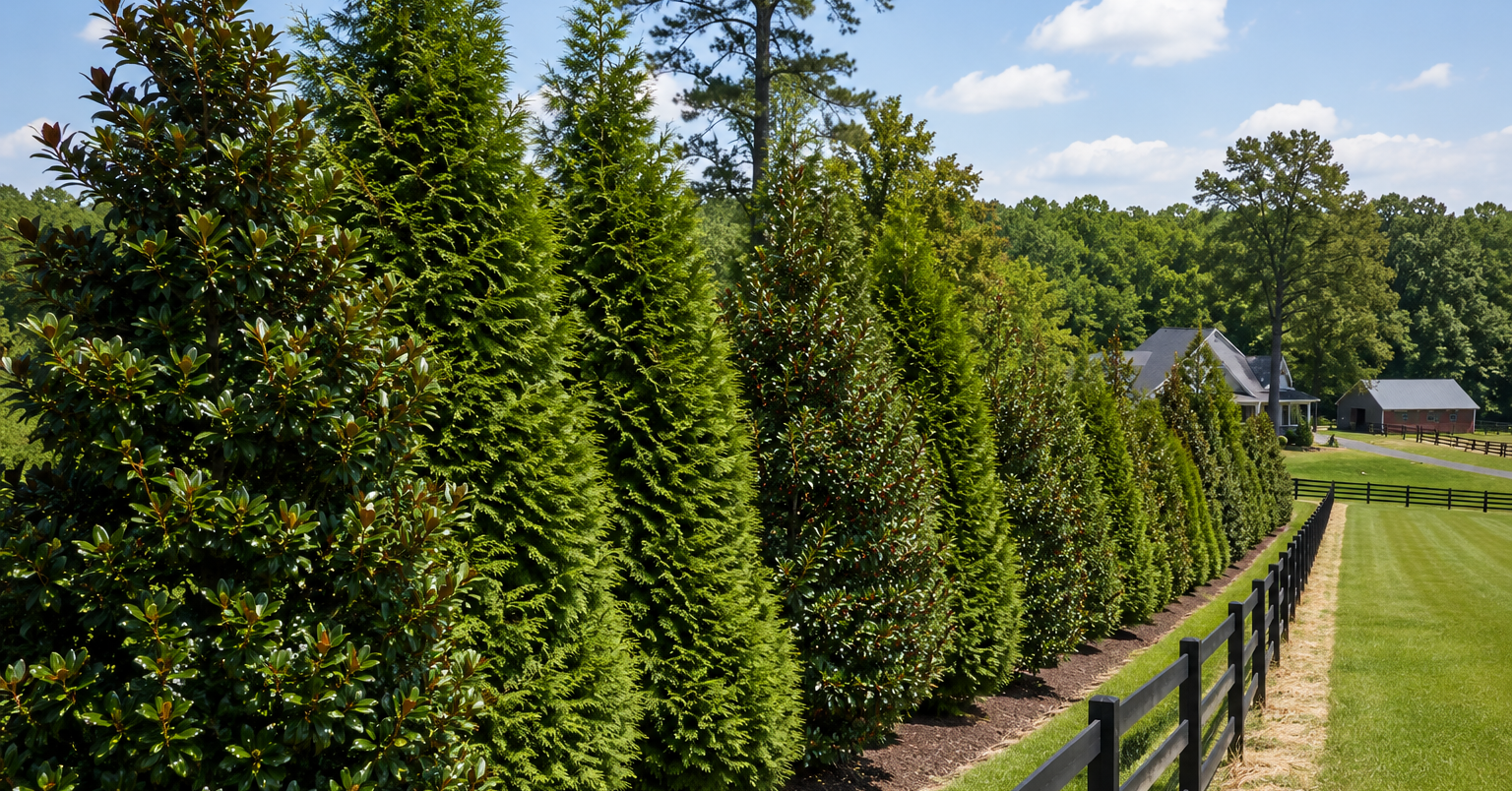
Natural privacy screens, often called living fences, are the superior choice for large acreages. They block wind, reduce noise from neighboring farms or roads, and provide a lush green backdrop that changes with the seasons. However, the success of a privacy screen depends entirely on species selection. In the past, many Marylanders turned to the Leyland Cypress, but these exotic trees are prone to bagworms and root rot in our heavy clay. Today, the smart money is on native species. Native trees are hardier, more resistant to local pests, and provide a vital service to our local ecosystem.
The Biology of Choice: Why Native Species Win
Selecting trees that are indigenous to the Mid-Atlantic region ensures that your privacy barrier is built on a foundation of biological resilience. Native trees have spent thousands of years adapting to Southern Maryland’s unique weather patterns, including our humid summers and wet winters. This means they are less likely to suffer from winter burn or heat stress compared to exotic species found in big-box retail stores.
Furthermore, native trees possess natural chemical defenses to ward off local pests. While an imported species might struggle against local fungi, a native tree like the American Holly has evolved to coexist with the local environment. This results in a low-maintenance landscape that requires significantly less supplemental watering and fertilization once established.
Top 5 Native Species for Southern Maryland Privacy in a Rural Backyard
1. American Holly (Ilex opaca)
The American Holly is the undisputed champion of native privacy. This slow-growing evergreen is a staple of the Chesapeake Bay region. It features stiff, leathery leaves with iconic spines that create a physical barrier as well as a visual one. Because they are broadleaf evergreens, they provide a solid wall of green that does not thin out at the bottom. The bright red berries produced by female trees provide a critical food source for local birds during the lean winter months.
2. Eastern Red Cedar (Juniperus virginiana)
The Eastern Red Cedar is the ultimate tough-as-nails tree for Southern Maryland. If your rural property has poor soil, high winds, or salt spray near the water, this is the tree you want. It is one of the most wind-resistant trees in our area, making it a perfect windbreak for large open fields in places like Hughesville or La Plata. They are incredibly fast-growing for a native evergreen and can quickly create an impenetrable screen.
3. Sweetbay Magnolia (Magnolia virginiana)
For areas of your property that stay wet, perhaps near a pond or a low-lying drainage area, the Sweetbay Magnolia is an elegant choice. While it is semi-evergreen in our climate, it maintains enough density to provide excellent screening. The flowers emit a heavy vanilla-like fragrance during the late spring, and the silvery undersides of the leaves provide a beautiful shimmering effect when the wind blows.
4. Southern Magnolia (Magnolia grandiflora)
If you have a large rural acreage and want a majestic, blackout-style screen, the Southern Magnolia is unmatched. While the species can become a giant, native cultivars like Bracken’s Brown Beauty or Little Gem offer more manageable footprints for privacy lines. These trees feature massive, glossy leaves with a rusty-brown velvet underside and dinner-plate-sized white blooms. Their foliage is so dense that it offers total visual and acoustic insulation from neighboring properties.
5. Eastern Hemlock (Tsuga canadensis)
For the north-facing side of a property or areas tucked into deep shade, the Eastern Hemlock offers a soft, feathery texture that few other evergreens can match. It is one of the few conifers that thrives in low-light conditions. When planted in a row, Hemlocks create a dark green, formal-looking wall that is excellent at muffling sound. While they require professional monitoring for the woolly adelgid, they remain a premier native choice for secluded, shady backyard boundaries.
5 Reasons Native Trees are Best for Privacy
1. Superior Climate Adaptation
Native trees have evolved to handle the specific temperature fluctuations and humidity levels of Southern Maryland. This specialized adaptation prevents the die-back common in exotic privacy trees after a harsh Maryland winter.
2. Natural Pest and Disease Resistance
Because these species evolved alongside local insects, they have developed natural resistances. This minimizes the need for chemical pesticides, making your backyard safer for children, pets, and local pollinators.
3. Deep Root Systems for Wind Stability
Native Maryland evergreens are designed to handle the straight-line winds common in our rural corridors. Their root structures are adapted to grip our specific clay and sandy loam soils, providing much better windbreak protection during storm season.
4. Low Maintenance Requirements
Once established, native privacy screens require significantly less supplemental watering. They are biologically programmed to thrive on the nutrients naturally available in the Southern Maryland soil profile.
5. Essential Biodiversity Support
A native privacy screen is more than just a wall; it is a habitat. By planting native plants, you provide the specific nesting sites and food sources required by local Maryland bird species like Northern Cardinals and Blue Jays.
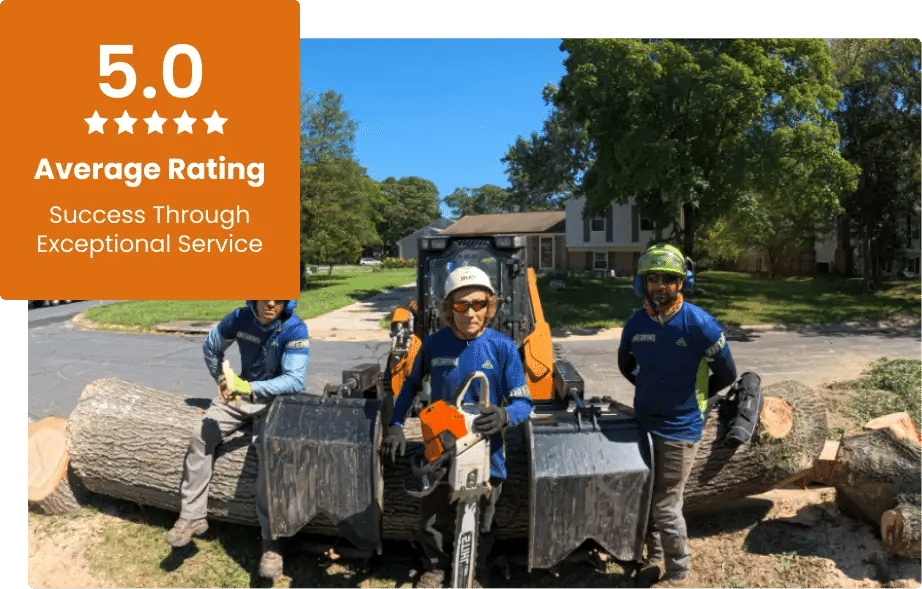
Empire Tree Services is the top choice in Southern Maryland for creating natural privacy screens through expert planting and land clearing. Serving St. Mary’s, Charles, and Calvert Counties, our 5-star rated team specializes in selecting native trees for privacy, ensuring healthy, wind-resistant, and beautiful results. With over 60 years of combined experience, Empire Tree Services is fully licensed, bonded, and insured, specializing in tree removals, tree trimming and pruning, stump grinding & stump removal, emergency tree removal, 24/7 storm cleanup services, land clearing services, forestry mulching, and commercial tree services with same-day appointments available to protect your property’s integrity. For a free consultation, call us today at (240) 249 7773.
Frequently Asked Questions
1. How far apart should I plant trees for a privacy screen?
For most native evergreens, a spacing of 6 to 10 feet is ideal. Staggering the trees in two rows (a zigzag pattern) provides faster visual coverage and better airflow than a single straight line.
2. Can I plant native trees in the Critical Area near the Bay?
Yes. In fact, the Maryland Critical Area Commission highly encourages the use of native species. Native trees like the Sweetbay Magnolia are perfect for these zones because they filter runoff and stabilize the shoreline.
3. Do native privacy trees require a lot of maintenance?
During the first two years, they require regular watering to establish roots. Once established, they are much more hands-off than exotic species. Annual pruning is recommended to maintain density.
4. What is the best time of year to plant privacy trees?
In Southern Maryland, early fall and early spring are best. Fall planting allows roots to grow throughout the winter without the stress of summer heat.
5. Why is my neighbor’s Cedar fine while my Cypress is dying?
Exotic cypresses are highly susceptible to local blights and root rot in Maryland’s heavy clay. Native Red Cedars have evolved to resist these specific pathogens.
Summary Checklist: Native Privacy Success
| Factors to Consider | Importance | Action Required |
| Soil drainage conditions | Critical | Choose Sweetbay Magnolia for wet areas and Eastern Red Cedar for dry or sandy soil |
| Amount of sun exposure | High | Plant American Holly in partial shade and Southern Magnolia in full sun locations |
| Wind resistance needs | High | Use Eastern Red Cedar as a natural windbreak for exposed properties and open acreage |
| Wildlife and pollinator support | Moderate | Plant American Holly to provide winter berries and shelter for local birds |
| Mature tree height | Moderate | Select species that will not interfere with overhead utility lines or nearby structures |
Final Advice
Investing in a native privacy screen is a commitment to the long-term health and beauty of your Southern Maryland property. Unlike a fence, which begins to deteriorate the moment it is installed, a living screen of native trees only gets stronger and more beautiful with age. In the rural reaches of St Mary’s and Charles Counties, the weather can be unpredictable, and the soil can be unforgiving. By choosing the best native trees for privacy in a rural backyard, you are working with nature rather than against it, ensuring that your boundary remains resilient against storms and pests alike.
The key to a successful screen is diversity, so consider mixing species like American Holly and Eastern Red Cedar to create a more natural look that provides different textures throughout the year. Taking the time to properly assess your soil and light conditions today will prevent the frustration of tree failure down the road. Ultimately, a well-planned native privacy line is an investment in your peace of mind and the environmental legacy of your land. By prioritizing these indigenous species, you ensure your rural retreat remains secluded and sustainable for decades to come.