
September 9, 2026
Key Takeaways
- Southern Maryland’s humid subtropical climate, clay-heavy soils, and coastal proximity favor certain native and well-adapted species over others.
- Native trees like willow oak, red maple, river birch, and American holly tend to require less long-term maintenance and handle local storms better.
- Fast-growing but weak-wooded species, such as Bradford pear and silver maple, are more prone to storm damage and are generally worth avoiding near structures.
- Matching a tree to its specific planting spot, sun exposure, soil drainage, and mature size prevents many long-term problems.
- A little planning before planting saves significant money and hassle compared to removing or replacing a poorly chosen tree years later.
Choosing the right tree for a Southern Maryland property isn’t just about picking something that looks good at the nursery. Local soil conditions, humidity, storm exposure, and proximity to the Chesapeake Bay all play a role in how well a tree performs over its lifetime. Homeowners have a wide range of options, but some species are noticeably better suited to the region than others.
What Makes Southern Maryland’s Growing Conditions Unique
Southern Maryland sits in a humid subtropical climate zone, with hot, humid summers, mild winters, and a fair amount of annual rainfall. The region’s soils tend to run heavy on clay, particularly further from the immediate coastline, which affects drainage and root development. Proximity to the Chesapeake Bay and its tributaries also means many properties deal with higher water tables, occasional flooding, and, in some areas, restrictions tied to the Critical Area buffer zone.
On top of that, the region sees a steady mix of summer thunderstorms, occasional tropical systems, and winter ice, all of which put real stress on tree structure. Species with weak wood or shallow root systems tend to struggle here more than they would in calmer climates.
Native and Well-Adapted Trees for Southern Maryland
Some of the trees which are native and well-adapted to Southern Maryland’s climate are as follows –
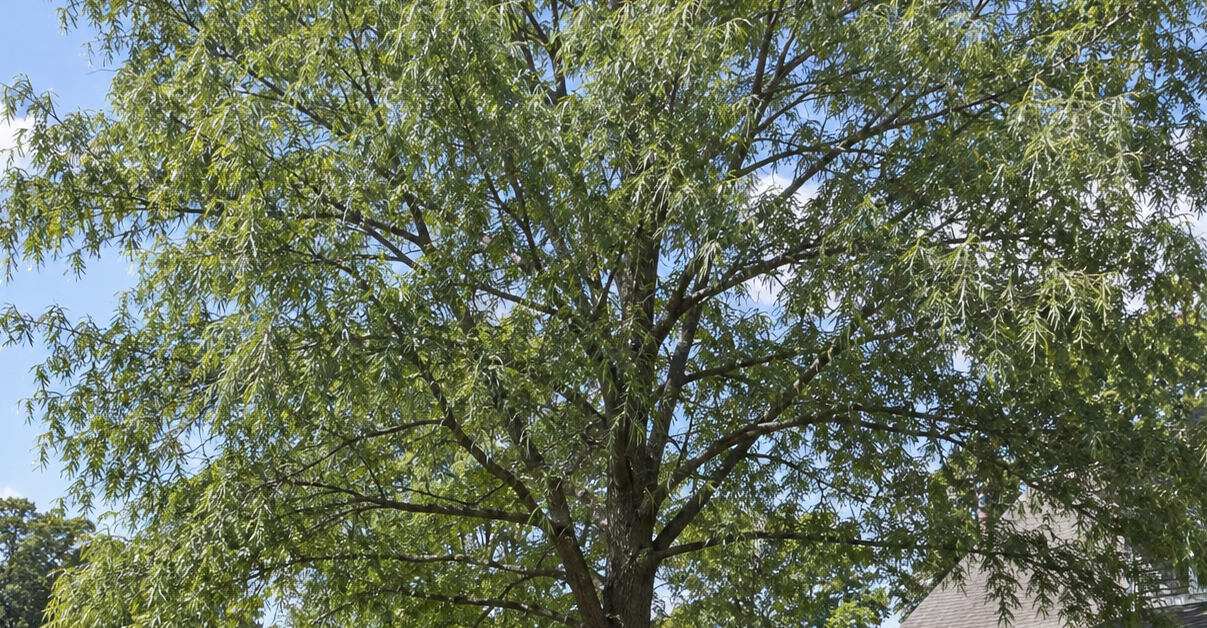
Willow Oak (Quercus phellos)
A fast-growing native oak with a graceful, narrow leaf and strong wood structure. Willow oaks tolerate a range of soil conditions, including the clay and occasionally wet soils common in the region, and they hold up well in storms once established.
Red Maple (Acer rubrum)
One of the most adaptable native trees in the mid-Atlantic, red maple tolerates wet or dry soil, offers reliable fall color, and grows at a moderate to fast pace. It’s a strong choice for yards without extremely rocky or compacted conditions.
River Birch (Betula nigra)
Naturally suited to floodplains and low-lying areas, river birch handles Southern Maryland’s occasional wet spots better than most ornamental trees. Its peeling, multi-colored bark also adds year-round visual interest.
American Holly (Ilex opaca)
Maryland’s state tree, American holly is an evergreen that provides structure, wind screening, and winter berries that support local wildlife. It handles both sun and partial shade and adapts well to the region’s soils.
Eastern Redbud (Cercis canadensis)
A smaller native flowering tree, redbud works well as an understory or accent tree, with vivid pink spring blooms. It tolerates clay soil and partial shade, making it a flexible option for smaller yards.
Bald Cypress (Taxodium distichum)
Despite the name, bald cypress isn’t limited to swamps. It’s remarkably adaptable, tolerates wet or dry soil once established, and has a strong track record of withstanding wind and storm stress, making it a solid choice near low-lying or occasionally flooded areas.
Southern Magnolia (Magnolia grandiflora)
An evergreen with large, fragrant blooms, southern magnolia does well in Southern Maryland’s climate, tolerates a range of soil types, and provides substantial year-round screening, though it needs room to reach its mature size.
Tulip Poplar (Liriodendron tulipifera)
Maryland’s state tree by another name in some references, tulip poplar grows quickly, tolerates the region’s soils well, and provides strong shade once mature, though it does best with adequate space away from structures given its eventual height.
Trees to Think Twice About
Not every popular ornamental tree holds up well in this region. A few species are worth approaching cautiously, particularly near a home, driveway, or power line:
- Bradford Pear: Fast-growing and popular for its spring blooms, but its narrow branch structure creates a serious risk of splitting during wind, snow, and ice events as the tree matures. It is also invasive in Maryland and is now listed as a prohibited invasive plant under Maryland law. The University of Maryland Extension’s guide to Callery (Bradford) Pear explains its structural weaknesses and invasive spread. The Maryland Department of Agriculture’s prohibited invasive plant list provides the current state regulations.
- Silver Maple: Silver maple grows quickly, but its wood can be relatively weak, and its shallow, spreading root system can create problems around sidewalks, driveways, drainage systems, and other nearby structures. Before planting one, homeowners should consider its mature size, root growth, and site conditions. The U.S. Forest Service’s Silvics of North America provides detailed information on silver maple growth and characteristics.
- Leyland Cypress: Popular for fast-growing privacy screening, but Leyland cypress can develop serious disease problems, particularly when trees are stressed by drought or poor growing conditions. Seiridium and Botryosphaeria cankers can cause branch dieback and, in severe cases, kill the tree. The University of Maryland Extension’s guide to Leyland Cypress canker diseases explains the symptoms, causes, and management options. The University of Maryland Extension’s plant problem resources also provides guidance on diagnosing and managing declining landscape plants.
None of these trees are necessarily wrong for every situation, but they generally require more maintenance and carry a higher long-term risk of storm damage or premature failure compared to better-adapted alternatives.
Matching the Tree to the Spot
Even a well-suited species can struggle if it’s planted in the wrong location. A few factors matter as much as species selection:
- Mature size versus available space: A tree that reaches 60 to 80 feet needs to be planted well clear of the house, driveway, and overhead utility lines, not just sized appropriately at planting.
- Drainage: Low, wet spots call for species like river birch or bald cypress; well-drained upland areas give more flexibility, including oaks and magnolias.
- Sun exposure: Full-sun species planted in heavy shade, or shade-tolerant understory trees planted in full, exposed sun, tend to struggle regardless of how well-suited they are to the region overall.
- Proximity to the Critical Area: Properties near shorelines, wetlands, or tributaries in the Chesapeake Bay Critical Area may have specific planting or buffer requirements worth checking before planting or removing trees in those zones.
Planting and Early Care Tips
New trees need consistent attention for the first two to three growing seasons, regardless of species. Deep, regular watering, particularly through the first summer, helps roots establish before the tree needs to handle a full Southern Maryland dry spell on its own. A 2 to 3 inch mulch ring (kept away from direct contact with the trunk) helps retain soil moisture and moderates temperature swings. Staking is occasionally useful for larger transplants in windy spots, but should be removed once the tree is established, generally within a year, to avoid weakening trunk development.
Choosing the right tree can save homeowners years of maintenance, costly removals, and storm-related problems. Empire Tree Services helps Southern Maryland homeowners select trees that match their property’s soil, drainage, sunlight, and available space. Our experienced team can recommend native and well-adapted species that thrive in local conditions. We can also help homeowners avoid weak-wooded or poorly suited trees that may become hazardous as they mature. With the right advice before planting, Empire Tree Services helps homeowners create healthier, stronger, and more attractive landscapes for years to come.
Frequently Asked Questions About the Best Trees for Southern Maryland
What is the fastest-growing tree that’s still a good choice for this region?
Willow oak and tulip poplar both grow at a solid pace while maintaining reasonably strong wood, making them better long-term choices than fast-growing but weak-wooded species like silver maple.
Are native trees really better than ornamental or non-native species?
Native trees are generally better adapted to local soil, rainfall patterns, and storm exposure, and they tend to require less long-term intervention. That said, some non-native species, like southern magnolia, also perform well here.
Can I plant trees close to the Chesapeake Bay shoreline on my property?
Properties within the Critical Area buffer zone may have specific rules about planting, clearing, and removal. It’s worth checking with the local Critical Area office or an experienced tree service before major changes near the shoreline.
How far from my house should I plant a large shade tree?
As a general guideline, large shade trees should be planted at least 15 to 20 feet from a structure’s foundation, with more distance for species that reach greater mature heights and canopy widths.
Is it a bad idea to plant a Bradford pear at this point?
Many Maryland resources now discourage new Bradford pear plantings due to its weak branch structure and invasive tendencies. A more storm-resilient flowering tree, like eastern redbud, is generally a better long-term choice.
Summary Checklist: Choosing a Tree for Southern Maryland
| Situation | What to Consider | Good Options |
| Low, wet, or floodplain area | Drainage tolerance | River birch, bald cypress |
| Full sun, well-drained upland yard | Space and mature size | Willow oak, tulip poplar |
| Small yard or understory spot | Mature size, shade tolerance | Eastern redbud, American holly |
| Want year-round screening | Evergreen structure | American holly, southern magnolia |
| Near the Chesapeake Bay Critical Area | Buffer zone regulations | Check local requirements first |
| Considering a Bradford pear or silver maple | Storm and structural risk | Consider a stronger-wooded alternative |
Final Advice
The right tree for a Southern Maryland yard depends on soil, sun, space, and how close it will sit to your home, but the region’s native and well-adapted species willow oak, red maple, river birch, American holly, and others consistently outperform fast-growing, weak-wooded alternatives over the long run. A little planning at planting time pays off for decades.
If you’re deciding what to plant, dealing with a tree that’s outgrown its spot, or want a professional opinion on what will thrive on your specific property, Empire Tree Services is happy to help homeowners across St. Mary’s, Charles, and Calvert Counties make the right call.