
August 14, 2026
Key Takeaways
- A tree’s outward appearance- full canopy, green leaves, intact bark- tells only part of the story about its internal health.
- Internal decay, hollowing, and rot often develop for years before any visible symptom appears.
- Certain warning signs, like fungal growth, old wounds, or subtle canopy thinning, can hint at problems hiding beneath the bark.
- Species and past injuries play a major role in which trees are more prone to hidden internal decay.
- A tree that seems fine can become a serious hazard almost overnight once internal decay reaches a tipping point.
- Regular professional inspections are the only reliable way to catch internal problems before they become emergencies.
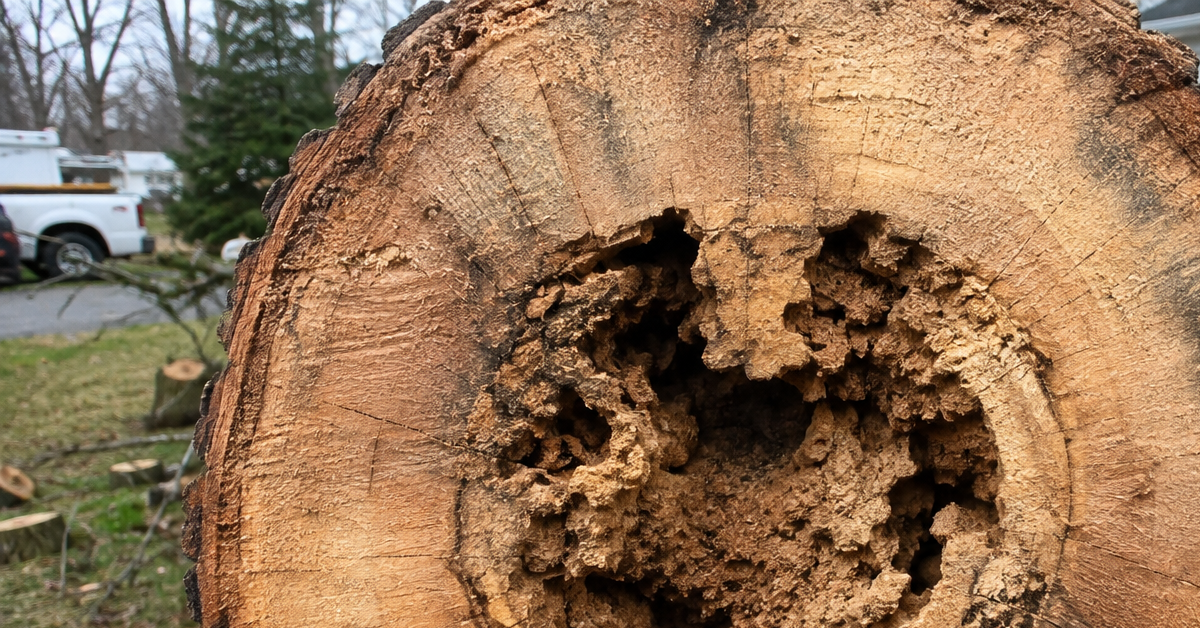
Homeowners in Southern Maryland are often surprised, sometimes shocked, when a tree crew opens up a tree that looks completely fine and finds a mostly hollow trunk, a network of decay running through the wood, or an internal crack that never showed on the surface. It’s one of the more unsettling realities of tree care: a tree can look green, full, and healthy right up until the moment it fails, because so much of what determines a tree’s true stability happens beneath the bark, invisible to anyone looking from the ground.
Why Trees Hide Their Problems So Well
Trees don’t heal injuries the way people or animals do. When a tree is wounded, whether by storm damage, a lawnmower nick at the base, an old pruning cut, or a pest infestation, it doesn’t repair the damaged tissue. Instead, it compartmentalizes the injury, sealing off the affected area to prevent decay from spreading into the rest of the tree. This process, known as compartmentalization, is remarkably effective at keeping a tree alive and looking healthy even while the sealed-off area continues to decay internally. This is exactly why a tree can maintain a full, green canopy for years after a wound that started internal decay. The tree isn’t lying to you, exactly, it genuinely is still alive and functioning. But the structural wood inside can be quietly hollowing out the entire time, and from a distance, there’s often no way to tell.
What Arborists Actually Find
When a tree comes down, either through planned removal or storm failure, it’s not unusual for the crew to find conditions that look nothing like what the outside of the tree suggested.
Some of the most common discoveries include:
- Extensive hollowing, where a trunk that looked solid is revealed to be mostly empty space, sometimes leaving only a thin outer shell of live wood supporting the entire tree.
- Advanced internal decay, a soft, discolored, or crumbling wood condition caused by fungal activity that had been progressing for years, often starting from an old wound or a root injury.
- Cracks running deep into the trunk that never reached the bark’s surface, meaning there was no visible warning from outside.
- Insect galleries, tunnels created by wood-boring insects that had been weakening the internal structure long before any external sign of infestation appeared.
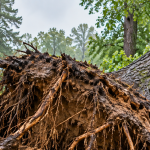
- Root decay, which is especially hard to detect because it happens entirely underground, and a tree with compromised roots can appear perfectly healthy above the soil line until it suddenly doesn’t.
None of these conditions are visible from a casual look at a tree’s canopy or bark. They’re usually only discovered during a hands-on inspection, a planned removal, or, worst case, after the tree has already failed.
The Subtle Clues That Do Show Up
While internal decay doesn’t announce itself the way a broken limb does, there are often faint signs that something isn’t right, if you know what to look for.
- Fungal growth at the base of the trunk, like mushrooms or conks, is one of the more reliable indicators of internal decay, since these fungi are actively feeding on decaying wood inside the tree.
- Old wounds or cavities, especially larger ones, are common entry points for decay organisms and worth monitoring over time rather than assuming they have simply healed over.
- Subtle canopy thinning, a tree that seems slightly less full than it used to be, or has more dead twigs than in past years, can indicate the root system or internal structure is under stress.
- Woodpecker activity concentrated on one area of the trunk sometimes signals that birds are finding insects living in decaying wood beneath the bark.
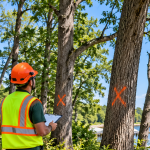
A hollow sound when the trunk is tapped is something an experienced tree service firm in Mechanicsville, MD can pick up on during an inspection, even when nothing looks visibly wrong. These signs are easy to miss for someone who isn’t specifically trained to look for them, which is part of why professional inspections catch problems that homeowners walk past every day without noticing.
Why Some Species Are More Prone to Hidden Decay
Certain trees are simply more susceptible to internal decay once they’re wounded.
- Species that are fast-growing tend to produce softer wood that decay organisms can spread through more easily.
- Trees with a history of being topped, a now-discouraged pruning practice that leaves large, poorly sealed wounds, are especially prone to internal decay starting at those old cut points.
- Trees growing in compacted soil or those that have experienced root disturbance from construction, trenching, or grade changes near the base are also more likely to have hidden root and lower-trunk decay, since root damage is one of the hardest problems to detect without professional equipment.
- Older, mature trees naturally carry more of this hidden history simply because they’ve had more time to accumulate wounds, whether from storms, past pruning, or environmental stress.
How This Changes the Removal or Save Decision
Discovering hidden decay during an inspection or removal often reframes the original question homeowners bring to an arborist.
- A tree that seemed like a simple pruning job can turn into a removal recommendation once internal decay is confirmed to be more extensive than the outside suggested.
- A tree a homeowner assumed needed to come down sometimes turns out to have only limited, well-compartmentalized decay that doesn’t threaten its overall stability, meaning it can often be preserved with monitoring or supportive care like cabling.
This is exactly why a visual assessment from the ground is never the final word. An arborist trained to read the subtle signs, and equipped to do a hands-on inspection when something seems off, gives homeowners a much more accurate picture of what’s actually happening inside a tree than appearance alone ever could.
Why Regular Inspections Matter More Than People Realize
Internal decay often progresses unnoticed for years, making seemingly healthy trees some of the most likely to fail without warning. That’s why routine inspections are especially important for mature or large trees located near homes, driveways, walkways, or other high-traffic areas.
Regular evaluations by a qualified arborist can uncover hidden structural issues before they become safety hazards. Ongoing inspections also create a record of the tree’s condition over time, making it easier to detect gradual changes in stability, health, or internal decay that might otherwise remain invisible until a failure occurs.
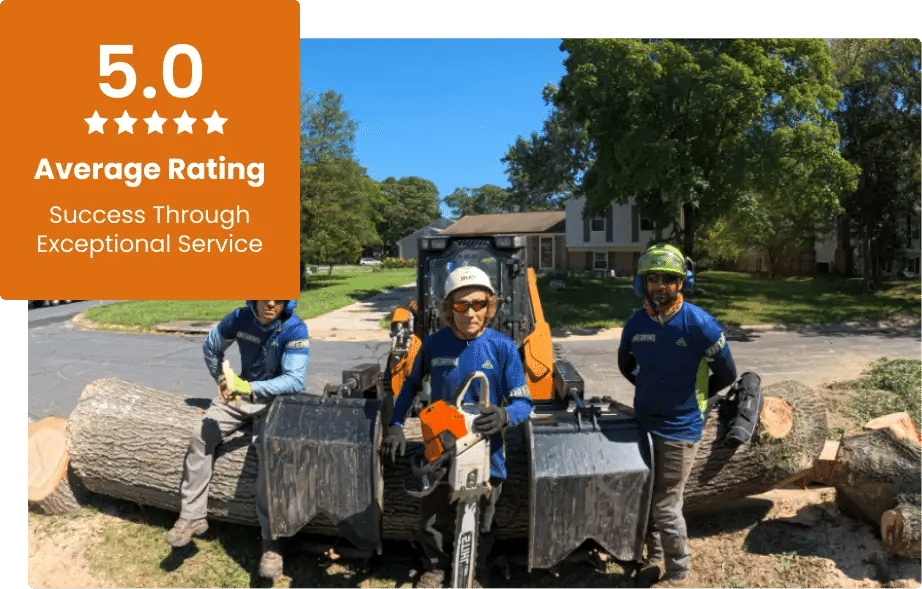
At Empire Tree Services, our crews have opened up more trees than we can count that looked completely healthy from the yard and turned out to be hollow, decayed, or structurally compromised inside. That experience is exactly why we don’t rely on a quick glance to make a recommendation. Every evaluation includes a close look at the trunk, root flare, canopy, and any visible warning signs, so homeowners in Southern Maryland get an honest answer about what’s really going on with their trees, not just what’s visible from the driveway.
If you have a tree on your property that you’ve never had professionally inspected, especially an older or larger one, it’s worth having a second set of trained eyes take a look. Contact Empire Tree Services at (240) 249-7773 to schedule a free estimate and inspection.
Frequently Asked Questions About Hidden Tree Decay by the Homeowners in Maryland
Can a tree really be dangerous even if it looks completely healthy?
Yes. Because trees seal off internal injuries rather than healing them, significant decay or hollowing can exist inside a tree while the canopy remains full and green.
How can I tell if my tree might have internal decay?
Look for fungal growth at the base, old wounds or cavities, unusual thinning in the canopy, or concentrated woodpecker activity. A professional inspection is the most reliable way to know for sure.
Does a hollow tree always need to be removed?
Not necessarily. Some hollow trees remain structurally sound for years if the remaining wood shell is thick enough and the tree isn’t showing other risk factors. An arborist can assess whether the tree is stable enough to preserve.
How often should older trees be professionally inspected?
Many arborists recommend at least an annual inspection for large or mature trees, with additional checks after major storms or any visible changes in the tree’s condition.
Can internal decay be caused by something that happened years ago?
Yes. Old pruning cuts, construction damage, storm wounds, or root disturbance from years earlier are common starting points for decay that isn’t discovered until much later.
Is there any way to treat internal decay once it’s found?
In some cases, supportive measures like cabling or bracing can help manage a tree with limited decay. In more advanced cases, removal is usually the safer recommendation.
Summary Checklist: Hidden Problems in Seemingly Healthy Trees
| Condition | Risk Level | Recommended Action |
| Fungal Growth or Mushrooms at the Base | High to Critical | Schedule a professional arborist inspection to evaluate active wood decay and root stability. |
| Extensive Internal Hollowing or Thin Shell | High to Critical | Have an arborist assess remaining sound wood thickness to determine if the tree can safely stand. |
| Old Pruning Wounds, Cavities, or Trunk Cracks | Moderate to High | Monitor for spreading internal decay and perform a hands-on risk assessment. |
| Subtle Canopy Thinning or Woodpecker Activity | Moderate | Check for internal stress, root compromise, or wood-boring insect activity under the bark. |
| Uninspected Mature Trees Near Buildings or Walkways | Moderate | Book routine professional inspections to catch hidden structural defects before storm failure. |
Final Advice
A tree’s appearance from the yard tells you very little about what’s actually happening inside its trunk and root system. The only way to know for sure is a hands-on evaluation from someone trained to catch the subtle signs that hint at a much bigger problem underneath. If you’ve never had your trees professionally inspected, or it’s been a few years since the last one, now is a good time. Empire Tree Services serves Mechanicsville, St. Mary’s, Charles, and Calvert Counties, and every estimate is free. Call us at (240) 249-7773 to schedule yours.