

Key Takeaways:
- Wind Resistance: Thinning the sail of a tree’s canopy is the best defense against high-velocity coastal winds.
- Target Management: Identifying trees that threaten power lines or structural roofs is the priority for storm prep.
- Ground Saturation: Southern Maryland’s coastal soil becomes unstable during heavy rains, leading to whole-tree failure.
- Critical Area Compliance: Removal of shoreline trees requires specific DMV-area environmental permits.
- Post-Storm Recovery: Having a pre-established relationship with a 24/7 emergency service ensures faster recovery.
Hurricane season in the Mid-Atlantic, stretching from June through November, brings a specific brand of anxiety to Southern Maryland. For residents in Mechanicsville, La Plata, and Prince Frederick, the beauty of our towering hardwoods and dense pines comes with a significant caveat: the potential for catastrophic tree failure during a tropical system. When hurricanes or nor’easters push up the Chesapeake Bay, the combination of high-velocity winds and torrential rain creates a perfect storm for property damage.
Preparing your landscape for a hurricane is not a task to be left for the day a tropical storm warning is issued. True storm mitigation happens weeks or months in advance. By following a strategic preparation plan, you can significantly reduce the risk of falling limbs, power outages, and structural damage to your home.
Understanding the Southern Maryland Storm Environment
Southern Maryland properties face unique challenges compared to inland areas. Our proximity to the water means that even weak tropical storms can produce localized wind gusts that exceed 70 mph. Furthermore, the geology of the DMV area is characterized by sandy loams and high-water tables, which means that trees can literally be uprooted as the ground becomes a liquid slurry during heavy rain events.
The Sail Effect and Wind Resistance
Large deciduous trees like White Oaks act like giant sails. When the canopy is overly dense, the wind cannot pass through it, creating massive pressure on the trunk and root system. Structural pruning, often called crown thinning, reduces this wind resistance. By strategically removing specific branches, an arborist allows the wind to flow through the tree rather than against it.
Ground Saturation and Root Anchor Failure
In Calvert and St. Mary’s counties, many trees grow in areas with shallow root systems due to the high water table. During a hurricane, the soil becomes saturated, losing its ability to grip the roots. If a tree is already leaning or has a lopsided canopy, the added weight of water on the leaves, combined with the softened ground, often results in the entire tree toppling.
The Strategic Pre-Storm Checklist
Before the first name is assigned to a tropical depression, homeowners should conduct a visual audit of their property.
Identify Target Trees
A target is any person or object that could be hit if a tree fails. Prioritize trees that overhang the master bedroom, the garage, or the main power service line to the house. If a tree is 80 feet tall and only 40 feet from your home, the entire house is within the strike zone.
Spotting the Red Flags of Failure
During your walk-through, look for these critical warning signs:
- V-Shaped Crotches: Stems that grow in a tight V are much more likely to split than those in a U shape.
- Fungal Conks: Mushrooms at the base of the tree indicate root rot, which is a leading cause of uprooting during storms.
- Deadwood: Any branch without leaves in mid-summer is dead and will likely become a projectile in 50+ mph winds.
- New Leans: If a tree has suddenly developed a lean, or if the soil is cracking on the side opposite the lean, the tree is already in the process of failing.
Structural Pruning vs. Topping
One of the most dangerous mistakes a Southern Maryland homeowner can make is topping a tree to reduce its height before a storm. Topping the practice of cutting off the top of the main trunk creates a massive wound that invites rot. It also stimulates the growth of water sprouts, which are weakly attached branches that break easily in minor winds.
Instead, professional arborists use reduction pruning. This technique shortens the length of heavy limbs by cutting them back to a lateral branch that is large enough to assume the terminal role. This maintains the health of the tree while significantly reducing the leverage the wind has on the limb.
The Impact of Salt Spray on Tree Health
For those living directly on the Patuxent or Potomac rivers, salt spray is a hidden factor in storm preparation. Salt can dehydrate the foliage of evergreens and hardwoods alike, causing browning and weakening the tree’s overall immune system. A weakened tree is less flexible and more prone to snapping. If you have had a particularly dry spring followed by salt-laden winds, deep-root fertilization can help strengthen the tree’s cellular structure before the heavy winds of autumn arrive.
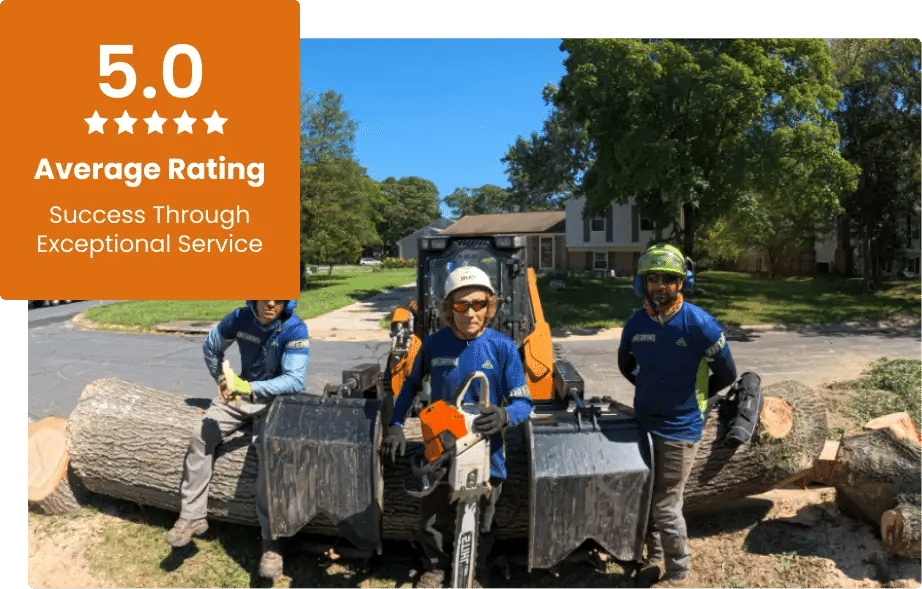
Preparing your Southern Maryland estate for hurricane season requires the precision and local knowledge that only Empire Tree Services can provide. With over 60 years of combined experience serving St. Mary’s, Charles, and Calvert counties, our expert team specializes in identifying the subtle structural flaws that lead to storm failure. We utilize specialized equipment to perform safe tree removal and structural pruning, ensuring your property is fortified against the unpredictable Chesapeake winds. As a locally-owned, minority-operated business, we take pride in our 5-star reputation for leaving properties clean and well-maintained.
Whether you need land clearing to create a safety buffer or emergency 24/7 storm damage cleanup, our licensed, bonded, and insured crew is ready to handle the job. We offer competitive pricing, military discounts, and the expertise required to navigate Critical Area Permits. Call Empire Tree Services today at (240) 249-7773 for a free quote and let us protect your home before the storm hits.
Frequently Asked Questions by Homeowners in Maryland
Should I cut down all the trees near my house before hurricane season?
No. Healthy trees can actually act as a windbreak, protecting your home from the full force of a storm. The goal is to remove the hazardous trees, not all the trees.
How close can a tree be to my house before it’s a danger?
There is no set distance. A healthy, well-pruned tree can be 10 feet from a house safely, while a diseased tree 50 feet away could be a major threat. It depends on the height, species, and structural integrity.
What is Critical Area tree removal?
In Maryland, land within 1,000 feet of the shoreline is protected. Removing trees in this zone requires a permit and often requires replanting to prevent shoreline erosion.
Does insurance cover tree removal before a storm?
Most homeowners’ insurance policies do not cover preventative tree removal. However, they almost always cover the cost of removal after a tree has fallen on a covered structure.
Can cables and braces save a tree from a hurricane?
Cabling can provide extra support for V-shaped forks, but it is not a guarantee against a Category 1 or 2 hurricane. It is an additional layer of protection, not a complete solution.
What should I do if a tree falls on my power lines during a storm in Maryland?
Stay at least 30 feet away and call the utility company immediately. Do not attempt to clear the tree yourself, even if you have a chainsaw, as the lines could still be energized.
Why is stump grinding important after a storm removal?
Leaving a stump can attract pests like termites and carpenter ants to your property. Grinding the stump allows you to replant or reseed the area, restoring the look of your landscape.
How long does it take to get a permit for tree removal in Southern Maryland?
The timeline varies by county (St. Mary’s, Calvert, or Charles), but it typically takes 2 to 4 weeks. This is why you should start your permit process in early summer.
Summary Checklist: Hurricane Readiness
| Condition | Risk Level | Recommended Action |
|---|---|---|
| Overhanging dead limbs | High | Schedule deadwood removal before peak storm season to reduce falling branch hazards |
| Cracks in the main trunk | Critical | Request immediate professional assessment to determine whether support systems or removal are required |
| Dense wind-catching canopy | Moderate | Schedule crown thinning to improve airflow and reduce wind resistance |
| Mushrooms at the tree base | High | Arrange an inspection to evaluate root decay, fungal activity, and overall structural stability |
| Exposed roots on a slope | Moderate | Apply mulch carefully and monitor for erosion, root exposure, or reduced tree stability |
Final Advice
The difference between a property that survives a hurricane and one that suffers thousands of dollars in damage is often a single afternoon of professional pruning. In Southern Maryland, the combination of our high humidity and coastal winds means that trees grow and decay faster than in many other parts of the country. Do not wait until a storm is in the forecast to call an arborist; by then, most reputable companies like Empire Tree Services will have their schedules filled with emergency calls.
Focus your energy on the low-hanging fruit first: clear your gutters so that excess water doesn’t saturate the soil at the base of foundation-side trees, and remove any small, dead branches you can reach safely. For the larger canopy work, ensure that your tree service provider is not only licensed and insured but also familiar with the specific tree species of the DMV. A White Oak requires a different pruning approach than a Loblolly Pine to maintain its structural balance. Finally, keep a digital record of your tree inspections and any work performed; this documentation can be invaluable if you ever need to file an insurance claim after a major weather event. By taking a proactive, informed approach to your landscape management, you can enjoy the shade and beauty of your trees with the peace of mind that you are prepared for whatever the Atlantic sends our way.